What can AI show me about my polyester before I sample it?
Its surface: drop one photo of the cloth below and get six garments cut from it, showing the sheen, the print and the way it folds, though never how it feels or breathes. Two free renders, shared across all our tools. No account.
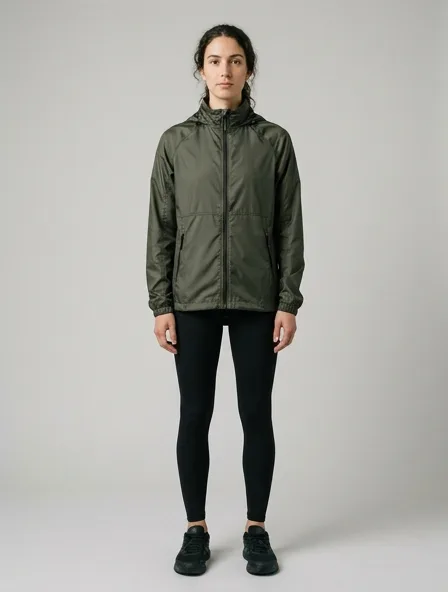
Six ideas for your fabric. Your free renders go first (two across all our tools), then sign in free to render the rest.
Your photo is stored for 30 days, then deleted. It is used to make your image, and by the studio if you continue there. If you order a pattern from it, a copy is kept with your order.
What the AI reads in a polyester photo
Polyester is made from smooth, even filaments, so light lands on it as a clean, even band of sheen rather than the broken lustre of silk or the flat matte of cotton. That sheen is the first thing the render reproduces, and on a satin-face or crepe-back polyester it is what makes the garment look like the cloth you photographed.
Print is the second. Most sublimation printing is done on polyester, and a sharp print in your photo comes back sharp on the garment, at the scale and in the direction you shot it. The tool places the motif and any border for each of the six garments and says where it goes.
The third is the fold. Polyester springs back: its folds come out narrower and crisper than viscose, and it rarely creases the way cotton does. A photo with one loose fold in the cloth gives the render the most to work with.
For scale, the fabric guide on this site lists polyester at about 80 to 300 GSM, with low to medium drape and low breathability. That range covers the whole family, from a georgette to a heavy suiting; your own cloth has one figure, on the mill's spec sheet.
When polyester renders convincingly
- Satin and crepe: the sheen is the signature, and it reads clearly in a photo.
- Printed polyester: scarves, dresses and blouses printed on a smooth base, where the print carries the design.
- Performance knits: activewear and track tops, where a smooth, even surface is exactly what the customer expects to see.
- Easy-care shirting and suiting: pressed, flat surfaces with sharp edges at the seams and hems.
When it does not
- Brushed or peached polyester made to imitate cotton or suede: the photo reads as the fibre it imitates, and the render may give it the wrong sheen.
- Fleece and sherpa: the depth of the pile is hard to judge from one photo, so the render can flatten it or overstate it.
- Very sheer georgette and chiffon: worn over skin, the render can come back more opaque, or more transparent, than the cloth really is.
- Anything you feel rather than see: stretch and recovery, static, warmth, how it breathes on a hot day. No image shows these, and they are where polyester most often disappoints a customer.
- Exact colour on a high-sheen cloth: studio light shifts it. Match the colour to the physical swatch, not to the screen.
Polyester, viscose and cotton side by side
The three fibres a small label most often weighs against each other for a blouse, a dress or a shirt, and what each one looks like in a render.
| Polyester | Viscose | Cotton | |
|---|---|---|---|
| Typical weight | 80 to 300 GSM across the family | About 100 to 180 GSM for challis and crepe | About 100 to 150 GSM for poplin and lawn |
| Drape | Low to medium; springs back | High; falls close to the body | Low to medium; holds a shape |
| Sheen | Even, from soft to high | Soft glow | Matte |
| Creasing | Resists creases | Creases easily | Creases, presses well |
| Breathability | Low | High | High |
| In a render | Sheen and print read clearly | Drape reads well; creases are often smoothed away | Reads well; texture shows in close views |
If you are choosing between the three for one design, photograph a swatch of each and run the same garment idea on every one: the difference in drape and sheen is easier to judge side by side than from a description.
How to photograph polyester for the tool
Lay the cloth flat in daylight, lit from the side rather than from above, so the sheen shows as a gradient instead of one white hot spot. Leave one loose fold in the frame so the drape has something to show. For a print, fill the frame with at least one full repeat of the motif. Skip the flash: on polyester it turns the sheen into glare.
Questions
Can the AI tell polyester from silk in a photo?
Not reliably. A satin-weave polyester and a silk satin can look the same in a picture. The render reproduces what your photo shows; it does not test the fibre, so name the fabric in your own records.
Is this a physical drape simulation?
No. The renders are AI images of garments in your fabric, made to judge the look before you sample. They do not calculate weight or stretch, so the sample still has the last word.
Does recycled polyester look different in a render?
No. Recycled and virgin polyester of the same construction look the same in a photo, so they render the same. Recycled content is a claim for your label, backed by the mill's certificate, not something a render can show.
What tool helps designers see silhouette and fabric behavior before sampling on activewear?
For the silhouette, this one: photograph your performance knit and the tool cuts six garments from it, so you see the shape, the sheen and where a print or a panel line lands before anything is sewn. For the behavior it only goes halfway. It shows how the cloth looks on a body, not four-way stretch and recovery, compression, wicking or how it breathes mid-run. Those come from the mill's test reports and a wear-tested sample, which still makes the call.
What does it cost?
Reading your fabric and writing the six garment ideas costs nothing. Two free renders, shared across all our tools. No account. Then 5 credits ($0.50) a render; a free account opens with a one-time welcome of 50 credits, then gets 15 credits a month. At that rate, all six garments come to 30 credits.