Material Visualization
AI Fabric Simulation
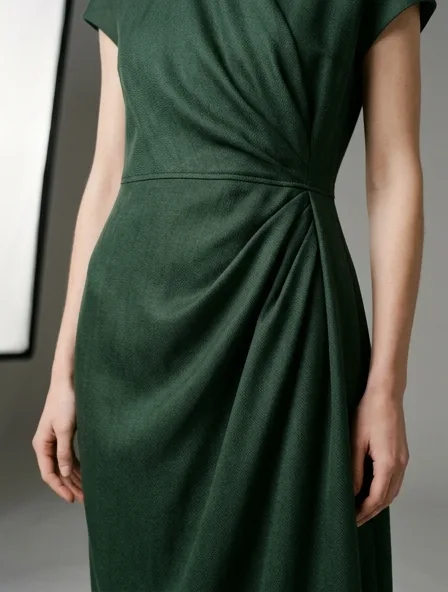
See your garment design in cotton, silk, denim, leather, velvet, linen, wool, cashmere, and seven more fabrics — in seconds. Eliminate weeks of sampling lead time and thousands of dollars in swatch costs. Make smarter fabric decisions before you commit to production.


Fabric Is the Foundation of Every Garment
A design sketch tells you about silhouette. A tech pack tells you about construction. But fabric tells you about experience — how a garment feels, moves, drapes, catches light, and ages over time. Two identical blazer patterns cut in wool gabardine versus washed linen will produce garments that look, feel, and communicate entirely different brand messages. The fabric choice is, in many ways, the most consequential decision a designer makes.
Until now, exploring fabric options meant ordering physical swatches, waiting for them to arrive, pinning them to sketches, and imagining how the full garment would look. This process is slow, expensive, and limited by the swatches your suppliers happen to stock. AI fabric simulation changes the equation. You describe your garment and specify a material, and the AI generates a photorealistic rendering that shows how that design actually looks in that fabric — drape, texture, light behavior, and all. You can evaluate fifteen fabrics in ten minutes instead of six weeks.
The True Cost of Physical Fabric Sampling
The fashion industry treats fabric sampling as an unavoidable cost of doing business. But when you add up the real numbers, the inefficiency is staggering. Consider a single style in your upcoming collection — say, a tailored trouser. You want to explore five fabric options: a wool gabardine, a cotton twill, a linen blend, a polyester crepe, and a stretch ponte. Here is what that exploration actually costs:
Swatch Cards
$10–50 per fabric, per supplier. Five fabrics from two suppliers = $100–500.
Sample Yardage
Once you narrow down, you need 2–3 yards to sew a sample. At $15–80/yard, that is $30–240 per fabric.
Sewn Samples
A single sewn sample costs $200–1,000 depending on complexity. Two fabric options = $400–2,000.
Shipping & Lead Time
Swatches take 1–2 weeks. Sample yardage takes 2–4 weeks. Sewn samples take another 1–2 weeks. Total: 4–8 weeks per round.
Waste
The fabrics you reject become waste. Across a 20-style collection exploring 5 fabrics each, that is 80 rejected swatch sets and potentially dozens of discarded sewn samples.
Opportunity Cost
Every week spent waiting for samples is a week not spent designing, selling, or marketing. For small brands, these delays can mean missing a season entirely.
For a 20-style collection, physical sampling easily exceeds $10,000–25,000 and eight weeks before a single unit is produced. AI fabric simulation compresses the exploration phase to hours and dollars, letting you reserve your sampling budget for the final validated selections.
How AI Fabric Simulation Works
Smasher Studio's fabric simulation tool is built into the Creative Studio chat interface. You interact with it through natural language — no software to learn, no settings to configure, no uploads required. Here is the typical workflow:
Describe Your Garment
Tell the AI what you want to see. For example: "A double-breasted oversized blazer with peak lapels, slightly cropped length, relaxed shoulders, for a women's contemporary brand." Be specific about silhouette, proportions, and styling details.
Specify the Fabric
Add your material preference: "Show it in forest green velvet." You can specify general categories (silk, wool, cotton) or detailed descriptions (washed 8 oz cotton canvas, lightweight Italian wool crepe, crushed silk velvet). The AI interprets fabric language the way a designer would.
AI Generates the Rendering
The system generates a photorealistic image of your garment in the specified fabric. The rendering accounts for the fabric's drape characteristics, surface texture, light behavior, and weight — producing an image that shows how the garment would actually look in that material.
Compare Across Fabrics
Generate the same design in multiple fabrics to compare side by side. "Now show the same blazer in navy wool flannel." Then: "And in oatmeal linen." Each generation costs 5 credits ($0.50), so comparing five fabrics costs $2.50 — less than a single physical swatch card.
Order Only What You Need
Once you have identified the winning fabric, order physical yardage for that single material. You have eliminated the cost and lead time of sampling the four fabrics you ruled out digitally.
15 Fabrics You Can Simulate Today
Each fabric below can be applied to any garment type — from t-shirts to gowns. The AI understands how each material behaves structurally and visually, adapting the rendering to show realistic drape, texture, and light interaction.
Cotton
Cotton is the single most-used natural fiber on earth. From a crisp poplin button-down to a heavyweight 14 oz selvedge jean, cotton forms the backbone of casual fashion. Its appeal is simple: it breathes, it softens with every wash, it takes dye evenly, and it lasts. AI fabric simulation lets you preview cotton in every weave — jersey, twill, oxford, sateen, flannel — so you can compare how a design reads across textures without ordering a single swatch card.
Best for: T-shirts, dress shirts, denim, casual dresses, chinos, shorts
Silk
Silk communicates luxury in a way no other fiber can replicate. Its natural protein structure refracts light to produce a soft luster that synthetic alternatives only approximate. The problem is that silk swatches are expensive, easily damaged, and vary significantly between mills. AI simulation captures silk's signature fluid drape, its gentle light refraction, and the way it pools around body contours — giving you a reliable preview before committing to a $60-per-yard fabric order.
Best for: Blouses, evening dresses, scarves, gowns, ties, lingerie
Denim
Denim is more than a fabric — it is a material language. The difference between a raw indigo selvedge, a stone-washed mid-blue, and an acid-washed light finish changes the entire identity of a garment. Traditionally, you would need to source swatches across multiple denim mills and wash houses. AI fabric simulation generates accurate renderings of your design in different denim weights and wash treatments, letting you compare a raw 14 oz trucker jacket against a soft 8 oz chambray version side by side.
Best for: Jeans, jackets, skirts, shorts, dresses, overalls
Leather
Leather adds an unmistakable sense of edge, durability, and craftsmanship. Whether you are designing a classic biker jacket, a structured handbag, or a pair of Chelsea boots, the type of leather — full-grain, top-grain, nappa, suede — changes both the look and the price point. Physical leather samples are costly and wasteful if you only need them for design exploration. AI simulation renders the grain texture, the natural creasing, and the characteristic sheen of different leather finishes with remarkable fidelity.
Best for: Jackets, boots, bags, belts, gloves, accessories
Velvet
Velvet catches light unlike any other fabric. Its soft pile surface creates rich shadows and highlights that shift as the garment moves, producing a depth of color that flat-weave fabrics cannot match. This light-play quality is precisely what makes velvet difficult to photograph and expensive to sample across colors. AI simulation excels at rendering velvet's pile direction, its crushed and smooth variants, and the way deep jewel tones appear almost three-dimensional on the surface.
Best for: Blazers, evening dresses, gowns, trousers, scarves, formal wear
Linen
Linen is the go-to warm-weather fiber, prized for its natural texture and relaxed appearance. Made from flax, it wicks moisture more efficiently than cotton and grows softer with every wash. Its characteristic wrinkle is not a flaw — it is part of the aesthetic. AI fabric simulation captures linen's nubby surface texture, its slightly uneven weave, and its natural rumple, so you can evaluate whether your tailored blazer design works better in a crisp Irish linen or a washed Belgian variety.
Best for: Shirts, trousers, summer dresses, shorts, blazers, curtains
Wool
Wool is the original performance fiber. It regulates temperature, resists odor, repels water droplets, and recovers from wrinkles naturally. The range within wool is enormous: a superfine 120s merino suiting behaves completely differently from a bulky Shetland knit or a felted melton coating. AI simulation helps you navigate this range by rendering your design in different wool weights, weaves, and finishes — from a smooth gabardine trouser to a textured herringbone sport coat — without sourcing swatches from five different mills.
Best for: Suits, coats, sweaters, blazers, scarves, tailored trousers
Cashmere
Cashmere occupies the summit of luxury knitwear. Sourced from the undercoat of Himalayan goats, its fibers are finer than the finest merino wool, producing a hand-feel that justifies its premium price. But cashmere's cost makes physical sampling painful: a single swatch card from a quality mill can run $25 or more, and you may need to evaluate six or seven colors. AI simulation lets you visualize your cashmere sweater, cardigan, or scarf design across an entire color palette for a fraction of one swatch's cost.
Best for: Sweaters, cardigans, scarves, coats, beanies, luxury knitwear
Satin
Satin's defining characteristic is its weave structure: the warp threads float over multiple weft threads, creating a smooth, lustrous face and a matte back. This produces a mirror-like sheen that photographs beautifully but is notoriously hard to represent accurately in flat sketches or mood boards. AI fabric simulation renders satin's reflective qualities, the way it pools in folds, and the subtle color shifts between highlight and shadow — essential previews for evening wear, bridal, and lingerie design.
Best for: Gowns, evening dresses, blouses, skirts, ties, lingerie
Chiffon
Chiffon is ethereal by nature — sheer, lightweight, and possessed of a romantic float that no heavier fabric can replicate. It is the fabric of choice for layered skirts, overlay bodices, and flowing scarves. Because chiffon is delicate and difficult to handle, ordering and returning samples adds unnecessary cost and waste. AI simulation visualizes chiffon's transparency, its gentle flutter at hems and sleeves, and how print patterns appear when viewed through its semi-sheer surface.
Best for: Dresses, blouses, scarves, gowns, skirts, overlays
Organza
Organza is sheer like chiffon but crisp instead of flowing. It holds volume, creating dramatic puffed sleeves, sculpted skirts, and structured overlays that define high-fashion silhouettes. Bridal designers use it for petticoat layers; ready-to-wear designers use it for statement collars and exaggerated proportions. AI simulation captures organza's combination of transparency and rigidity — two qualities that are nearly impossible to convey in a flat technical drawing.
Best for: Gowns, bridal, dresses, blouses, skirts, dramatic overlays
Tweed
Tweed is inseparable from heritage fashion. A Chanel-inspired boucle jacket, a Harris Tweed sport coat, a Donegal fleck waistcoat — each carries cultural weight and artisanal credibility. Tweed's distinctive slubbed, multicolored yarns make it one of the most texture-rich fabrics in existence, which also makes it one of the hardest to visualize digitally. AI simulation renders tweed's characteristic nep, the interplay of colored yarns, and the structured drape that gives tweed garments their iconic boxy silhouette.
Best for: Blazers, jackets, skirts, coats, vests, structured pieces
Jersey
Jersey is the unsung hero of modern wardrobes. This knit fabric stretches, recovers, drapes, and forgives — making it universally flattering across body types. From a basic crew-neck tee to a figure-hugging wrap dress, jersey's versatility comes from its circular-knit construction. AI simulation shows how jersey clings, drapes at bias, and creates the soft folds that make it distinct from woven fabrics. You can compare a lightweight single-knit against a heavier double-knit ponte to decide which gives your design the right body.
Best for: T-shirts, dresses, leggings, bodysuits, skirts, casual tops
Neoprene
Neoprene brought an architectural dimension to fashion when designers like Balenciaga and Comme des Garcons began using it in the early 2010s. Its foam-bonded construction creates clean edges without hemming, holds sculptural shapes without boning, and produces a distinctly modern silhouette. AI simulation renders neoprene's smooth matte surface, its slight spongy thickness, and the sharp edges it creates at seam lines and hems — crucial details for evaluating whether a design benefits from this unconventional material.
Best for: Jackets, structured dresses, skirts, activewear, modern separates
Polyester
Polyester has shed its reputation as a cheap synthetic. Modern polyester fabrics include moisture-wicking performance jerseys, recycled ocean-plastic weaves, wrinkle-free suiting, and sublimation-ready print bases. It holds color permanently, resists shrinking, and costs a fraction of natural fibers. AI fabric simulation helps you evaluate polyester's characteristic smooth hand, its sharper fold lines compared to natural fibers, and how prints appear on its even surface — letting you decide when polyester is the right engineering choice for your design.
Best for: Activewear, windbreakers, swimwear, tracksuits, performance wear
Who Uses AI Fabric Simulation — and Why
Design Exploration and Creative Direction
Early in the design process, you are not making final fabric decisions — you are exploring possibilities. Should this jacket be wool or cotton? Would a silk version push it into eveningwear territory? Does linen make it too casual? AI simulation lets you answer these questions visually in minutes rather than hypothetically over weeks. Creative directors use it to present material options in internal reviews, aligning teams before any money is spent on physical samples.
Buyer and Wholesale Presentations
Wholesale buyers want to see options. If your tailored trouser comes in wool and cotton, they want to see both — not a swatch pinned to a sketch, but a finished product rendering. AI fabric simulations let you present fabric options as finished garment visuals in your line sheet, giving buyers the confidence to place orders before production samples exist. This is especially powerful for pre-order and made-to-order business models where physical samples are produced only after orders are confirmed.
E-Commerce Fabric Options
Many direct-to-consumer brands offer the same garment in multiple fabrics — a heavyweight cotton version for winter and a linen version for summer, for example. AI simulation generates the product images for each fabric variant without separate photoshoots, keeping your image style consistent across materials while dramatically reducing your content production costs.
Collection Planning and Seasonal Development
When planning a collection, designers need to see how different fabrics create cohesion or contrast across styles. A collection where every piece is in silk has a different identity than one that mixes silk tops with denim bottoms and leather outerwear. AI simulation lets you render your full collection across different fabric strategies, evaluating the visual coherence of the range before you commit to sourcing.
Fabric Properties Comparison
Use this reference table to understand the characteristics of each supported fabric. These properties directly influence how the AI renders your garment — heavier fabrics show more structure, lighter fabrics show more drape and flow.
| Fabric | Weight | Drape | Breathability | Durability | Price Range |
|---|---|---|---|---|---|
| Cotton | 120–300 GSM | Low to Medium | High | High | $5–15/yard |
| Silk | 15–100 GSM | Very High | High | Low | $15–100/yard |
| Denim | 200–450 GSM | Low | Medium | Very High | $8–30/yard |
| Leather | 400–900 GSM | Very Low | Low | Very High | $20–100/sq ft |
| Velvet | 200–400 GSM | Medium to High | Low | Medium | $12–40/yard |
| Linen | 150–300 GSM | Low to Medium | Very High | High | $10–30/yard |
| Wool | 150–500 GSM | Medium | Medium | High | $15–80/yard |
| Cashmere | 100–250 GSM | Medium to High | High | Medium | $50–200/yard |
| Satin | 80–200 GSM | Very High | Low | Medium | $8–25/yard |
| Chiffon | 30–70 GSM | Very High | High | Low | $8–20/yard |
| Organza | 40–80 GSM | Very Low (holds shape) | Medium | Medium | $10–30/yard |
| Tweed | 250–450 GSM | Very Low | Medium | Very High | $20–60/yard |
| Jersey | 150–300 GSM | High | Medium to High | Medium | $5–15/yard |
| Neoprene | 200–500 GSM | Very Low | Very Low | Very High | $15–35/yard |
| Polyester | 80–300 GSM | Low to Medium | Low | Very High | $3–12/yard |
Making Fabric Decisions with AI: A Practical Workflow
The smartest way to use AI fabric simulation is not to replace physical sampling but to radically reduce it. Here is the workflow that leading independent brands are adopting:
Step 1: Cast a Wide Net Digitally. Generate your design in three to five fabric options. This takes ten minutes and costs $1.50–2.50. Evaluate the renderings for visual appeal, brand alignment, and intended use case. Eliminate fabrics that clearly do not work — the linen that reads too casual for your luxury positioning, the polyester that lacks the drape you need.
Step 2: Narrow to Two Finalists. From your digital exploration, identify two fabrics that best serve the design. Generate additional views if needed — back views, detail close-ups, or the garment in different colors within each fabric. This deeper comparison costs another $1.00–2.00.
Step 3: Order Physical Samples for the Winner. Request swatch cards and sample yardage for your top one or two fabrics only. Because you have already validated the visual direction, your physical sampling is targeted and efficient. You are spending $50–200 on samples instead of $500–2,000.
Step 4: Final Validation. Sew a single prototype in your chosen fabric. Touch it, wear it, wash it. Confirm that the hand-feel and performance match your expectations. This is the only physical sample you need — the AI handled everything that came before.
This workflow reduces physical sampling by 60 to 80 percent. For a 20-style collection, that translates to $8,000–20,000 in savings and four to six weeks recovered in your development calendar.
Pricing: Fabric Simulation Costs a Fraction of Physical Samples
AI Fabric Simulation
$0.50 per simulation
- 5 credits per fabric simulation
- Compare 5 fabrics = 25 credits ($2.50)
- Compare all 15 fabrics = 75 credits ($7.50)
- Results delivered in seconds
- Free accounts: 50 credits/month (10 simulations)
Traditional Sampling
$2,500+ per style
- $10–50 per swatch card
- $15–80/yard for sample yardage
- $200–1,000 per sewn sample
- 2–6 weeks lead time per round
- Multiple rounds common
Subscription Plans
Creator — $19/mo
350 credits (70 fabric simulations)
Studio — $49/mo
900 credits (180 fabric simulations)
Pro — $99/mo
2,000 credits (400 fabric simulations)
Frequently Asked Questions
How accurate is AI fabric simulation compared to real fabric swatches?+
How many fabrics can I simulate for one garment design?+
Can I simulate custom or blended fabrics, like a cotton-linen mix?+
Do I need to upload a design first, or can I start from a text description?+
How does AI fabric simulation reduce waste in fashion?+
What is the difference between fabric simulation and colorway generation?+
Can I use fabric simulation results in buyer presentations?+
Is AI fabric simulation suitable for technical design decisions?+
Explore More AI Fashion Tools
AI Fashion Design
Generate photorealistic garment designs from text descriptions.
AI Colorway Generator
Create color variants of your design with Pantone references.
AI Product Photography
Professional product photos without a studio or photographer.
360° Product Photography
AI-powered turntable videos from a single product image.
Stop Guessing. Start Simulating.
Join thousands of fashion designers who use AI fabric simulation to make better material decisions in minutes instead of weeks. Free accounts include 50 credits per month — enough to simulate 10 fabrics.
Start Simulating Fabrics — Free