COMPLETE MANUFACTURER SOURCING GUIDE
How Do I Find a Clothing Manufacturer as a Small Brand?
Prepare one tech pack and one production pattern per style first, then ask five to ten factories that accept small runs for a quote, sample with the best two or three, and only then commit. Small-batch workshops near you usually take lower minimums than large overseas plants.
Last updated:
Start with what the factory asks for
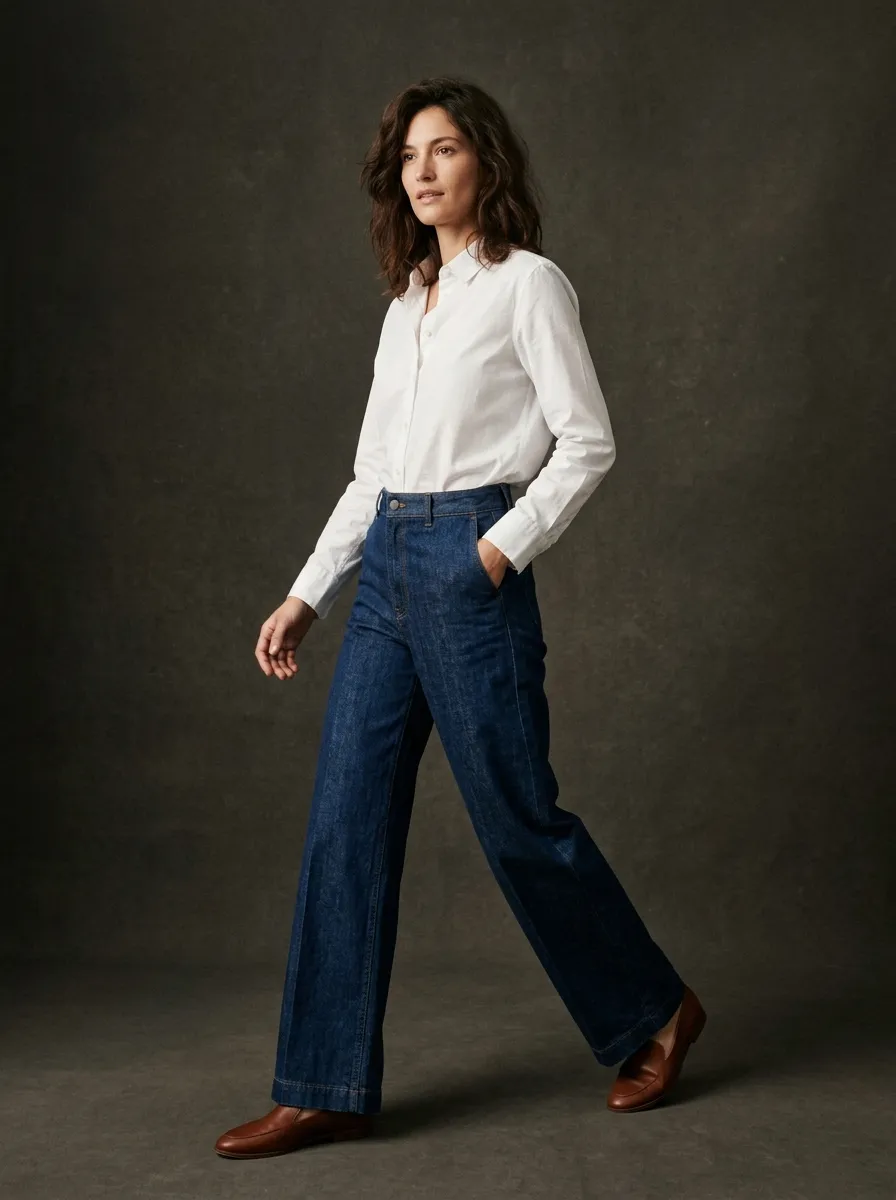
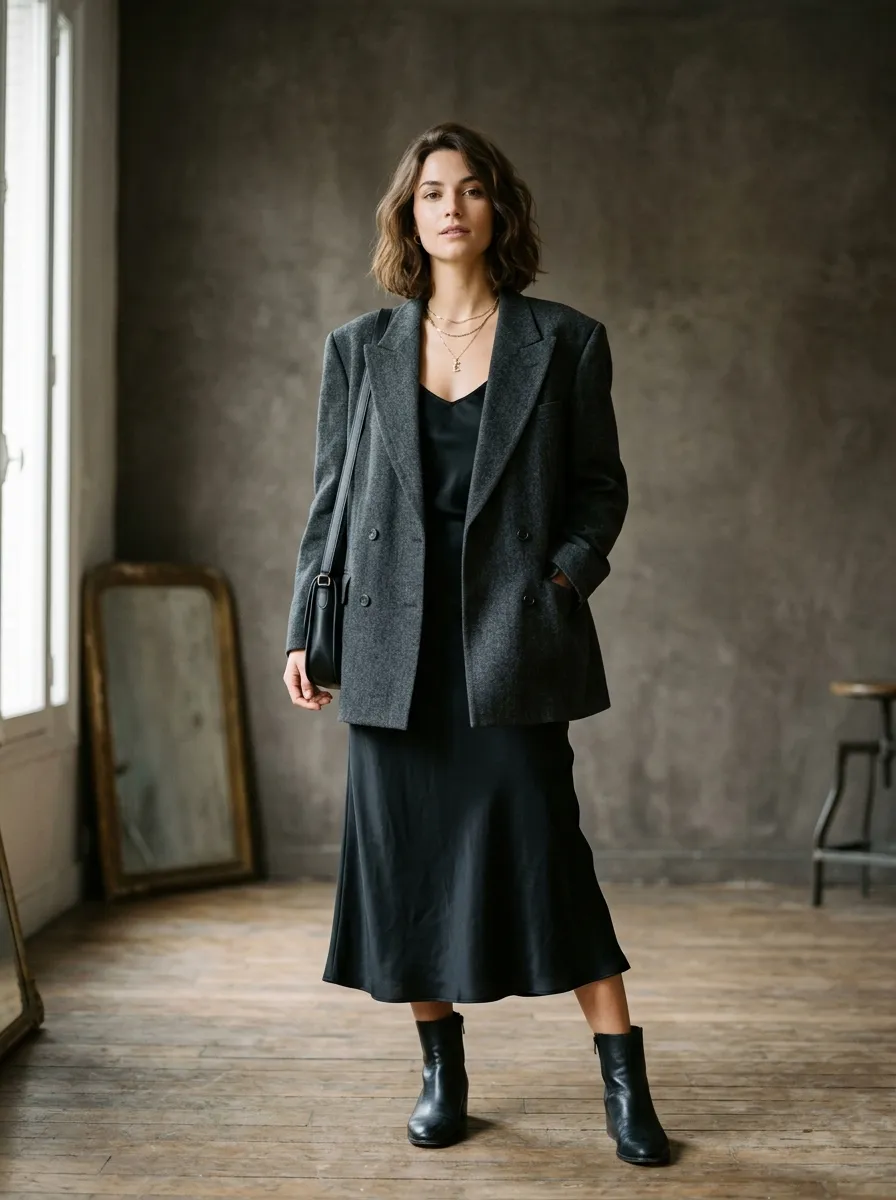
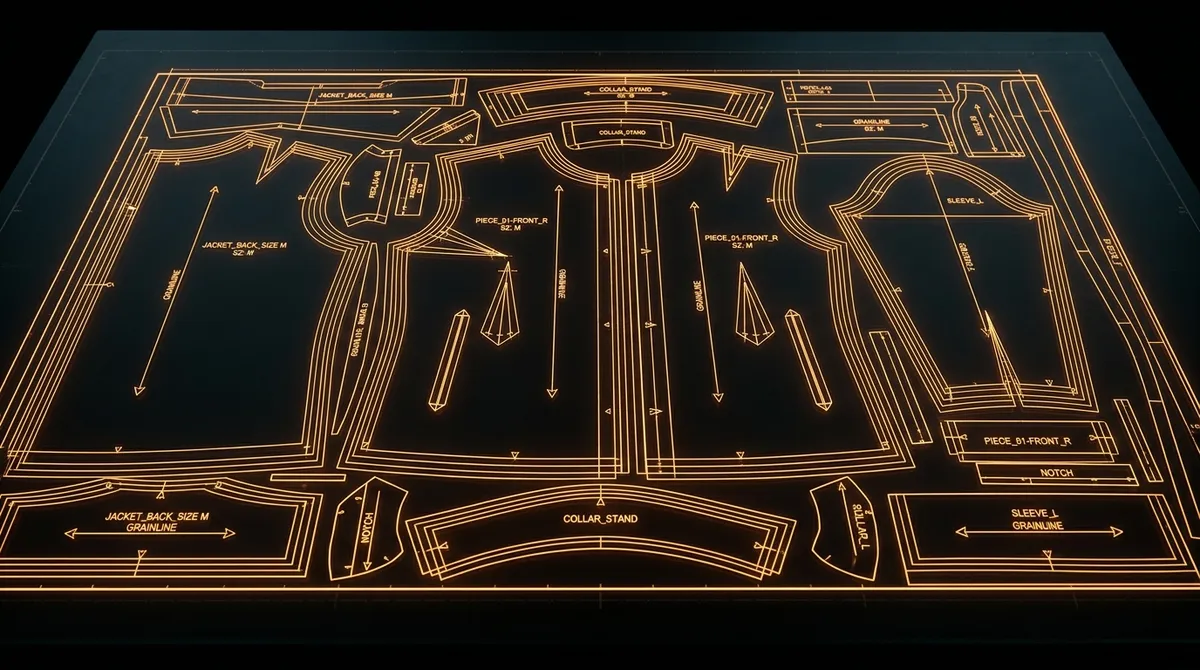
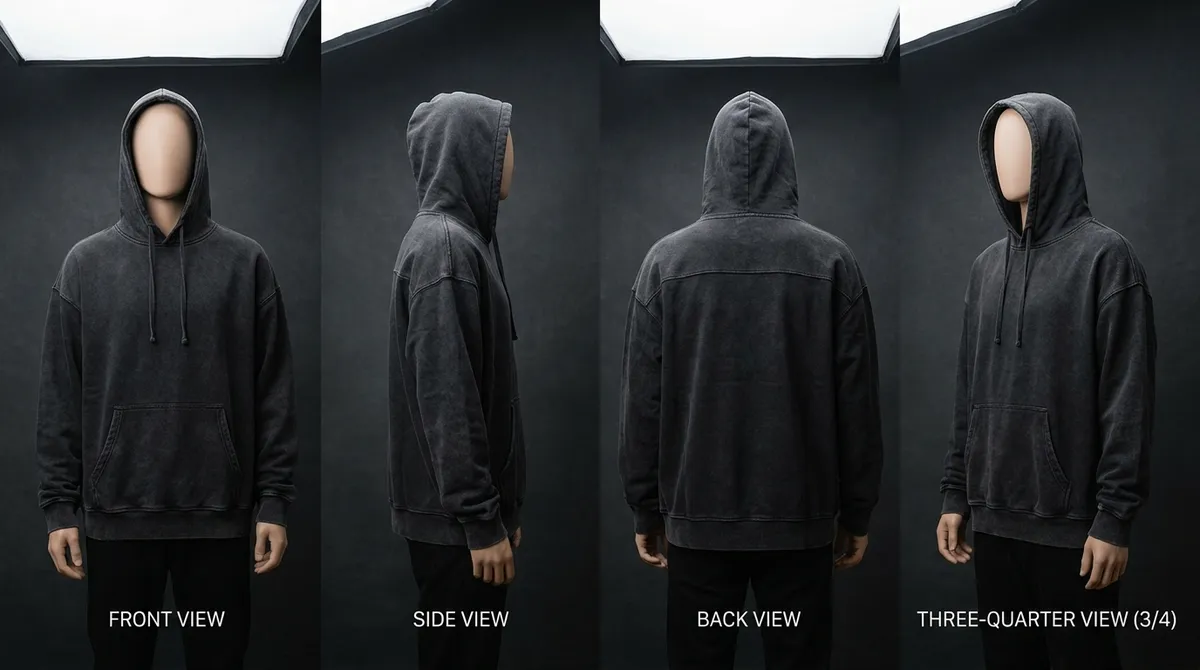
A factory quotes from a flat sketch and a pattern. Upload a photo of your sample or a reference garment: you get the flat sketch, a read of its construction and the price of its production pattern, which a professional pattern maker then cuts.
Two free renders, shared across all our tools. No account.
Drop a garment photo here
or choose one from your phone or computer
JPEG, PNG or WebP. Any phone photo works.
Your photo is stored for 30 days, then deleted. It is used to make your image, and by the studio if you continue there. If you order a pattern from it, a copy is kept with your order.

Why Finding the Right Manufacturer Makes or Breaks Your Brand
Your manufacturer is not just a vendor; they are a partner who determines the quality, consistency, and reliability of every product that carries your brand name. The wrong manufacturer leads to quality defects, missed deadlines, communication breakdowns, and wasted capital. The right manufacturer becomes a long-term collaborator who helps you grow from a startup into an established brand.
In 2026, fashion brands have more manufacturing options than ever. The rise of small-batch domestic factories, online manufacturer directories, and improved international logistics means you can find a production partner that fits your exact needs, whether that is 25 units of a single style or 10,000 units across a full collection. But more options also mean more due diligence. Scams, quality misrepresentation, and unreliable factories are still common, especially when sourcing internationally.
This guide covers the entire process from preparing your materials through managing active production. It draws on real-world pricing data, common industry practices, and the mistakes that fashion startups make most frequently. Whether you are producing your first capsule collection or expanding into new product categories, these principles apply.
Types of Clothing Manufacturers
Understanding the different types of manufacturers helps you find the right fit for your brand, budget, and level of experience. Each type offers different services, price points, and minimum order requirements.
Cut & Sew (CMT)
Cut, Make, Trim
You supply the fabric, patterns, and trims. The factory cuts, sews, and finishes the garments. This gives you maximum control over materials but requires more supply chain management. Best for experienced brands who have established fabric suppliers.
Typical MOQ: 50 to 500 units
Best for: Experienced brands with material sourcing capability
Full-Package Production (FPP)
End-to-End Manufacturing
The manufacturer handles everything: fabric sourcing, pattern making, cutting, sewing, finishing, and quality control. You provide the tech pack and approve samples. Higher per-unit cost but dramatically simpler logistics. Best for startups.
Typical MOQ: 100 to 1,000 units
Best for: First-time brands and startups
Private Label
Pre-Designed Products
The manufacturer offers existing garment styles that you customize with your branding, labels, and sometimes minor design modifications. Fastest path to market with lowest development costs, but limited design differentiation.
Typical MOQ: 50 to 200 units
Best for: Brands focused on speed-to-market over uniqueness
Print-on-Demand (POD)
No Minimum Orders
Products are manufactured one at a time as orders come in. No upfront inventory investment, but limited to basic garment types (t-shirts, hoodies, tote bags) and significantly higher per-unit costs. Quality and consistency vary by provider.
Typical MOQ: 1 unit
Best for: Testing designs and validating demand before investing
Vertical Manufacturer
Mill + Factory Integrated
These manufacturers own both the textile mill and the garment factory. They produce fabric and manufacture garments in-house, offering better pricing on materials and more control over the entire production chain. Common in Turkey, Portugal, and parts of China.
Typical MOQ: 500 to 2,000 units
Best for: Growing brands with consistent volume
Cooperative / Atelier
Small-Scale Craft Production
Small workshops, often family-owned or cooperative-structured, that produce limited quantities with high craftsmanship. Per-unit costs are higher but quality and attention to detail are often exceptional. Common in Italy, India, and parts of Latin America.
Typical MOQ: 10 to 100 units
Best for: Luxury and artisan brands valuing craft over scale
Domestic vs Overseas Manufacturing
The decision between domestic and overseas manufacturing involves tradeoffs across cost, quality, speed, communication, and minimum order requirements. Here is an honest comparison of the most popular manufacturing regions.
| Region | Cost Level | Typical MOQ | Lead Time | Best For |
|---|---|---|---|---|
| United States | $$$$ | 25 to 200 | 4 to 8 weeks | Startups, "Made in USA" brands, fast turnaround |
| Portugal | $$$ | 200 to 500 | 6 to 10 weeks | Mid-range to premium European brands, high quality |
| Turkey | $$ to $$$ | 200 to 1,000 | 6 to 12 weeks | Denim, knitwear, leather; strong textile industry |
| China | $ to $$$ | 300 to 3,000 | 8 to 16 weeks | High volume, diverse capabilities, wide fabric range |
| India | $ to $$ | 200 to 1,000 | 8 to 14 weeks | Cotton, embroidery, handcraft, sustainable fabrics |
| Bangladesh | $ | 1,000 to 5,000 | 10 to 16 weeks | Very high volume basics, lowest cost per unit |
| Vietnam | $ to $$ | 500 to 2,000 | 8 to 14 weeks | Sportswear, outerwear, growing technical capabilities |
| Italy | $$$$ | 100 to 500 | 8 to 12 weeks | Luxury, leather goods, tailoring, "Made in Italy" cachet |
For fashion startups placing their first order, the United States (for US-based brands) and Portugal (for European brands) offer the best balance of low MOQs, reasonable lead times, and manageable communication. Yes, the per-unit cost is higher, but the reduced risk, easier quality control, and lower minimum investment often make domestic production cheaper in total for a first collection.
Overseas manufacturing becomes cost-effective once your order volumes justify it. The rule of thumb: if you are ordering fewer than 300 units per style, domestic manufacturing is usually more practical. Above 500 units per style, overseas manufacturing starts delivering meaningful cost savings, often 30 to 50 percent lower per-unit costs even after accounting for international shipping, duties, and longer lead times.
Turkey deserves special mention for brands producing denim, knitwear, or leather goods. Turkish factories have world-class capabilities in these categories, with MOQs and pricing that fall between European and Asian manufacturers. Many mid-range and premium fashion brands produce in Turkey as a compromise between cost and quality.
Prepare Your Tech Pack
A tech pack is the blueprint manufacturers use to build your garment. It communicates every detail (measurements, construction, materials and finishing) so the factory can produce exactly what you envision without ambiguity. Sending a manufacturer a mood board or a sketch is not enough. Serious factories expect a professional tech pack, and your tech pack quality directly influences the quality of your quote and your first sample.
A complete tech pack includes the following components:
- Flat sketches (front, back, side views) with callouts for key design details
- Bill of Materials (BOM): every fabric, trim, button, zipper, label, and thread with specifications
- Graded measurement chart (size spec) with tolerances for each measurement point
- Construction details: seam types, stitch counts per inch, hem styles, finishing techniques
- Color specifications with Pantone references for all materials
- Artwork placement: exact positioning for prints, embroidery, or labels with dimensions
- Packaging specifications: poly bags, hang tags, care labels, tissue paper, boxes
- Reference images: photos of similar garments or details you want to replicate
Creating tech packs traditionally requires hiring a freelance technical designer at $150 to $500 per style, or a full-time technical designer at $50,000 to $80,000 per year. For startups, this is often a painful expense, especially when you need tech packs for 5 to 15 styles before you know which will sell.
Smasher Studio pairs AI speed with human precision: you design the garment with AI, and professional pattern makers then cut the production-grade DXF cutting pattern, from $29 per garment with the first revision included. The complete factory tech pack, with measurements, construction notes, and materials specifications, plus grading, marker layout and seam allowances, are available as add-ons from $5 to $15. The result is a professional package that is far better than what most startups send manufacturers, for a fraction of the cost of hiring a freelance technical designer.
Research Manufacturers
Finding manufacturers requires using multiple channels. No single directory or platform lists every factory, and the best manufacturers are often found through industry connections rather than Google searches. Cast a wide net, then narrow down based on your specific requirements.
Online Directories & Platforms
- Maker's Row: US-focused directory with 10,000+ factories. Paid subscription ($35/mo) but the most reliable for domestic manufacturing.
- Sewport: Free global directory. Submit your project and receive quotes from vetted manufacturers. Good for both domestic and international sourcing.
- Alibaba: Largest B2B marketplace with thousands of clothing manufacturers, primarily in China. Use with caution, verify Trade Assurance status, request samples, and start with small orders.
- Sqetch: European manufacturer directory focused on Portugal, Italy, Turkey, and Eastern Europe. Curated listings with factory audit data.
- Kompass & ThomasNet: Industrial directories that include garment manufacturers. Less fashion- specific but useful for finding factories that do not market themselves online.
Offline Channels
- Trade Shows: Magic (Las Vegas), Texworld (New York/Paris), Premiere Vision (Paris), Canton Fair (Guangzhou). Meeting manufacturers in person lets you evaluate quality firsthand and build relationships.
- Industry Referrals: Ask other brand founders, fashion school alumni, fabric suppliers, and pattern makers for manufacturer recommendations. The best factories often do not advertise because they are at capacity from referral business alone.
- Local Fashion Incubators: Organizations like the Fashion Incubator San Francisco, Brooklyn Fashion + Design Accelerator, and CFDA programs maintain manufacturer databases for their members.
- Garment Districts: Visit your city's garment district (NYC's Midtown, LA's Downtown, London's East End). Many small factories are open to walk-ins and can quote on the spot for simple projects.
Aim to identify 10 to 15 potential manufacturers, then narrow to 5 to 8 that match your garment type, order volume, and budget range. Check each factory's specialization: a factory that excels at knit activewear may not be the right fit for structured woven blazers. The best results come from working with manufacturers who regularly produce garments similar to yours.
Request Quotes and Evaluate Responses
Once you have your shortlist, send each manufacturer your tech pack along with a structured quote request. A professional quote request includes your tech pack, desired order quantity, target delivery date, size ratio (e.g., S:M:L:XL = 1:2:2:1), and any special requirements. The more specific your request, the more accurate and comparable the quotes will be.
Expect to wait 3 to 10 business days for quotes. Manufacturers that respond within 1 to 2 days are usually more organized and responsive: a good indicator of how production communication will go. Factories that take more than 2 weeks to provide an initial quote are likely either too busy, disorganized, or not interested in your order size.
What to Compare in Quotes
Price Breakdown
- Per-unit cost (CMT only vs full-package)
- Fabric cost per meter/yard
- Setup fees (screens, molds, digitizing)
- Sample cost and lead time
- Shipping/FOB terms
Terms & Policies
- Payment terms (deposit % and balance timing)
- MOQ flexibility (per style and per colorway)
- Defect rate tolerance and remake policy
- Production timeline with milestone dates
- Communication method and frequency
Red flags in quotes: prices that are dramatically lower than other quotes (likely indicating material substitution or hidden fees); full payment required upfront (standard is 30 to 50 percent deposit with balance due before shipping or upon delivery); no mention of quality control processes; vague timelines without specific milestones; and unwillingness to provide a sample before committing to bulk production.
Do not automatically choose the cheapest quote. The lowest price often means the lowest quality, material substitutions, or a factory that is underquoting to win your business and will add charges later. The best approach is to eliminate the cheapest and most expensive outliers, then evaluate the remaining quotes based on communication quality, specialization fit, and terms.
Evaluate Samples
Never commit to bulk production without receiving and thoroughly evaluating physical samples. Order samples from your top 2 to 3 manufacturers. Yes, this means paying for samples from multiple factories, but it is the cheapest insurance you can buy against a failed production run. Sample costs typically range from $100 to $500 per style depending on complexity.
When samples arrive, evaluate them against a structured checklist. Do not rely on a casual “looks good” assessment. Measure every dimension against your spec sheet, examine construction details under good lighting, test the fabric feel, and check that all trims match your specifications.
Sample Evaluation Checklist
Measurements & Fit
- All measurements within spec tolerance (typically +/- 0.5 inch)
- Garment drape and silhouette match design intent
- Proportions look correct when worn
- Ease of movement is appropriate for the garment type
Construction Quality
- Seam allowances are consistent and properly finished
- Stitch count per inch matches specification
- No loose threads, puckering, or skipped stitches
- All closures (zippers, buttons, snaps) function smoothly
Materials
- Fabric weight, hand, and drape match approved swatch
- Color matches Pantone or approved standard
- All trims (buttons, zippers, labels) match specifications
- Care labels have correct content and instructions
Finishing
- Pressing and presentation are clean
- Print or embroidery placement is accurate
- No stains, marks, or damage
- Packaging meets specifications (if applicable)
If the first sample requires revisions (and it usually does), provide detailed, specific feedback with measurements and photos. Vague comments like “make it fit better” are not actionable. Instead, specify: “Reduce chest width by 1 inch across all sizes; lengthen sleeves by 0.5 inches; move front pocket placement up 1 inch from current position.” Most manufacturers expect 1 to 2 revision rounds, with each round taking 1 to 3 weeks.
Negotiate Terms
Once you have a manufacturer whose samples meet your standards, it is time to negotiate the terms of your production agreement. Everything is negotiable to some degree, but approach negotiations as building a partnership, not squeezing margins. A manufacturer that feels respected and fairly compensated will prioritize your orders and work harder to resolve problems.
Key Terms to Negotiate
- MOQ Flexibility: Many manufacturers will lower MOQs for your first order if you commit to reorders above their standard minimums. Ask for a lower “trial run” MOQ (often 50 percent of their standard) with the understanding that subsequent orders will meet full MOQ requirements.
- Payment Terms: Standard is 30 to 50 percent deposit with the balance due before shipping (for new clients) or net-30 after delivery (for established relationships). For your first order, 50 percent deposit and 50 percent before shipping is typical. Try to negotiate net-15 or net-30 terms starting from your second order.
- Lead Times: Get specific production timelines with milestone dates: fabric in-house, cutting start, sewing start, finishing, QC, ship date. Include a late delivery clause (e.g., 2 to 5 percent discount for each week past the agreed ship date) if late delivery would significantly impact your business.
- Defect Policy: Establish an acceptable defect rate (industry standard is 2 to 3 percent for “seconds”-level defects) and clarify who bears the cost of defective units. Options include replacement at manufacturer cost, credit toward next order, or per-unit refund for defects above the agreed tolerance.
- Volume Pricing: Ask for price breaks at specific volume thresholds. Even if you cannot meet higher volumes now, knowing the price at 200, 500, and 1,000 units helps you plan your growth trajectory and pricing strategy.
Manage Production
Active production management is the difference between receiving what you ordered and receiving a disappointing approximation. Even with the best manufacturer, things can go wrong: fabric dye lots shift, a machine operator misreads a spec, or your cutting layout wastes more fabric than estimated. Proactive communication catches problems before they become expensive.
Establish a communication cadence before production starts. For domestic production, a weekly check-in email or call is usually sufficient. For overseas production, request milestone photos and updates at each major stage: fabric arrival, cutting, sewing (in-line samples), finishing, and pre-shipment.
Production Milestone Checklist
- Fabric and trim arrival confirmed: request photos of materials against approved samples
- Cutting started: confirm quantity and size breakdown match your order
- First 10 units sewn (in-line sample): request photos and measurements of random unit
- Mid-production check: request count of completed vs remaining units; ask about any issues
- Finishing and QC: request defect report with number of units passed, failed, and repaired
- Pre-shipment inspection: if possible, hire a third-party QC inspector (costs $200 to $400)
- Packing and shipping: confirm packaging matches spec; get tracking and estimated delivery
- Goods received: inspect 10 to 20 percent of units randomly upon delivery; document any issues immediately
For overseas production, consider hiring a third-party quality control inspector for a pre-shipment inspection. Companies like QIMA, SGS, and Asia Inspection offer garment inspections for $200 to $400 per visit. The inspector checks a random sample of units against your specifications and provides a pass/fail report. This small investment can save you thousands in defective inventory and customer returns.
Common Mistakes When Finding a Manufacturer
These are the most frequent and costly mistakes fashion startups make when sourcing manufacturers. Avoiding them will save you thousands of dollars and months of wasted time.
Choosing based on price alone
The cheapest manufacturer is almost never the best choice. Low prices usually mean cutting corners on materials, construction, or quality control. A $3 t-shirt that falls apart after two washes costs more than an $8 t-shirt that lasts years in returns, refunds, negative reviews, and brand damage. Compare total value: quality, communication, reliability, and flexibility, not just per-unit cost.
Skipping the sample phase
Some startups try to save money by approving production from a photo or a verbal description. This invariably results in receiving bulk inventory that does not match expectations. Always order and evaluate physical samples from at least 2 manufacturers, even if it delays your timeline by a month. The $200 to $500 you spend on samples prevents $5,000 to $20,000 in unusable inventory.
Sending incomplete tech packs
A vague tech pack leads to a vague product. If your tech pack says "blue cotton t-shirt" without specifying the exact Pantone color, cotton weight, stitch specifications, and measurements, the manufacturer will make their own decisions, and they will not match your vision. Invest time and money in complete, detailed tech packs. AI tools like Smasher Studio make this affordable for startups.
Not having a written agreement
Verbal agreements and email confirmations are not sufficient. Before production begins, have a written contract or purchase order that specifies pricing, quantities, delivery dates, payment terms, quality standards, defect policies, and intellectual property protections. This document protects both you and the manufacturer.
Ordering too much inventory on the first run
Many startups order 500 to 1,000 units per style for their first collection because the per-unit cost is lower. Then they discover that market demand does not match their projections, and they are sitting on $20,000+ of unsold inventory. Start with the manufacturer’s minimum (or negotiate a trial run at reduced MOQ), prove market demand, then scale production for reorders.
Ignoring import duties and logistics costs
When comparing domestic vs overseas manufacturing, many startups only compare per-unit production costs. But overseas manufacturing adds import duties (typically 5 to 25 percent of declared value for clothing), international freight ($2,000 to $5,000 per shipment for small orders), customs brokerage fees ($150 to $300), and insurance. A garment that costs $8 to manufacture overseas might cost $12 to $14 landed, potentially eliminating the cost advantage over domestic production.
MOQ Comparison by Manufacturer Type and Region
Understanding minimum order quantities across different manufacturer types and regions helps you match your budget and volume expectations with the right production partner.
| Manufacturer Type | MOQ per Style | Per-Unit Cost | Sample Cost | Lead Time |
|---|---|---|---|---|
| US Small-Batch | 25 to 100 | $15 to $45 | $100 to $300 | 4 to 8 weeks |
| US Standard | 100 to 500 | $10 to $30 | $150 to $400 | 6 to 10 weeks |
| Portugal / Turkey | 200 to 1,000 | $8 to $25 | $150 to $500 | 8 to 12 weeks |
| China (Alibaba) | 50 to 500 | $5 to $20 | $50 to $200 | 8 to 16 weeks |
| China (Direct Factory) | 500 to 3,000 | $3 to $15 | $100 to $300 | 10 to 16 weeks |
| India | 200 to 1,000 | $4 to $18 | $50 to $200 | 8 to 14 weeks |
| Print-on-Demand | 1 unit | $15 to $35 | $15 to $35 | 3 to 7 days |
| Full-Package (any region) | 100 to 1,000 | +10 to 30% vs CMT | $150 to $500 | 8 to 14 weeks |
Per-unit costs assume standard fabrics (cotton, polyester blends, basic knits). Premium or specialty fabrics add significantly to material costs. All lead times include sampling phase.
Frequently Asked Questions
What is the minimum order quantity (MOQ) for most clothing manufacturers?+
How long does it take to go from first contact to finished production?+
Should I use a domestic or overseas manufacturer for my first collection?+
What should I include when requesting a quote from a manufacturer?+
What are red flags when evaluating a clothing manufacturer?+
How much should I expect to pay for clothing manufacturing?+
Can I find a manufacturer who handles everything from fabric to finished product?+
Do I need a tech pack before contacting manufacturers?+
Related Guides
Fashion Brand Startup Costs
Complete breakdown of every cost involved in launching a fashion brand in 2026, traditional vs AI-first.
AI Fashion Design Tools
Design collections, draw flat sketches, and create product photography with AI.
Smasher Studio Pricing
Plans from $19/month. DXF pattern from $29 per garment; the factory tech pack is a $10 add-on.
Get Manufacturer-Ready in Hours, Not Weeks
Smasher Studio gives you design visualizations, and professional pattern makers cut the DXF patterns, with the factory tech pack as an add-on, that manufacturers take seriously. Walk into manufacturer meetings with production-ready documentation, at a fraction of traditional costs.