COMPLETE COST BREAKDOWN FOR 2026
How Much Does It Cost to Start a Clothing Brand?
A small first collection usually needs a few thousand dollars before production and much more once stock is ordered: fabric, one pattern and one fit sample per style, the production run itself, images, a site and marketing. Production is the largest line; the money saved early comes from testing designs before anything is sampled.
Last updated:
Spend nothing until the designs are right
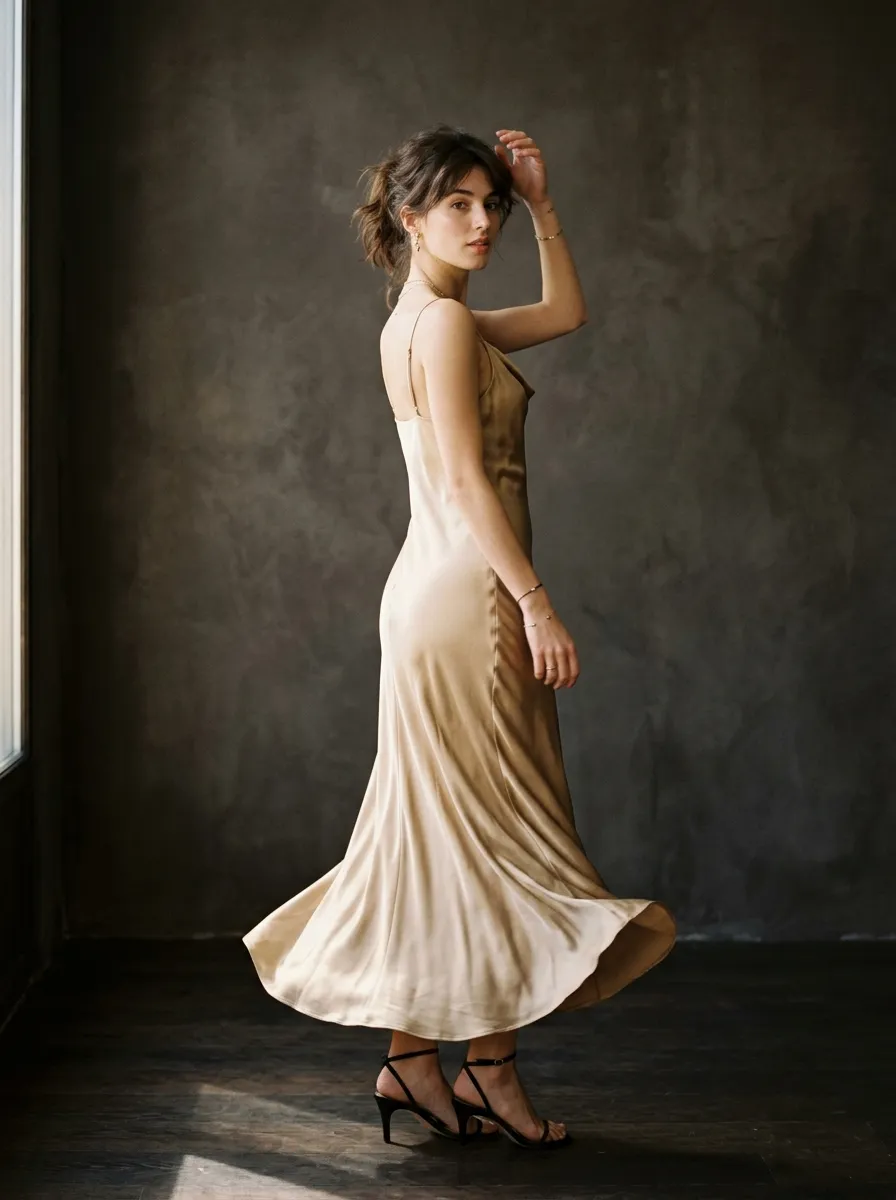
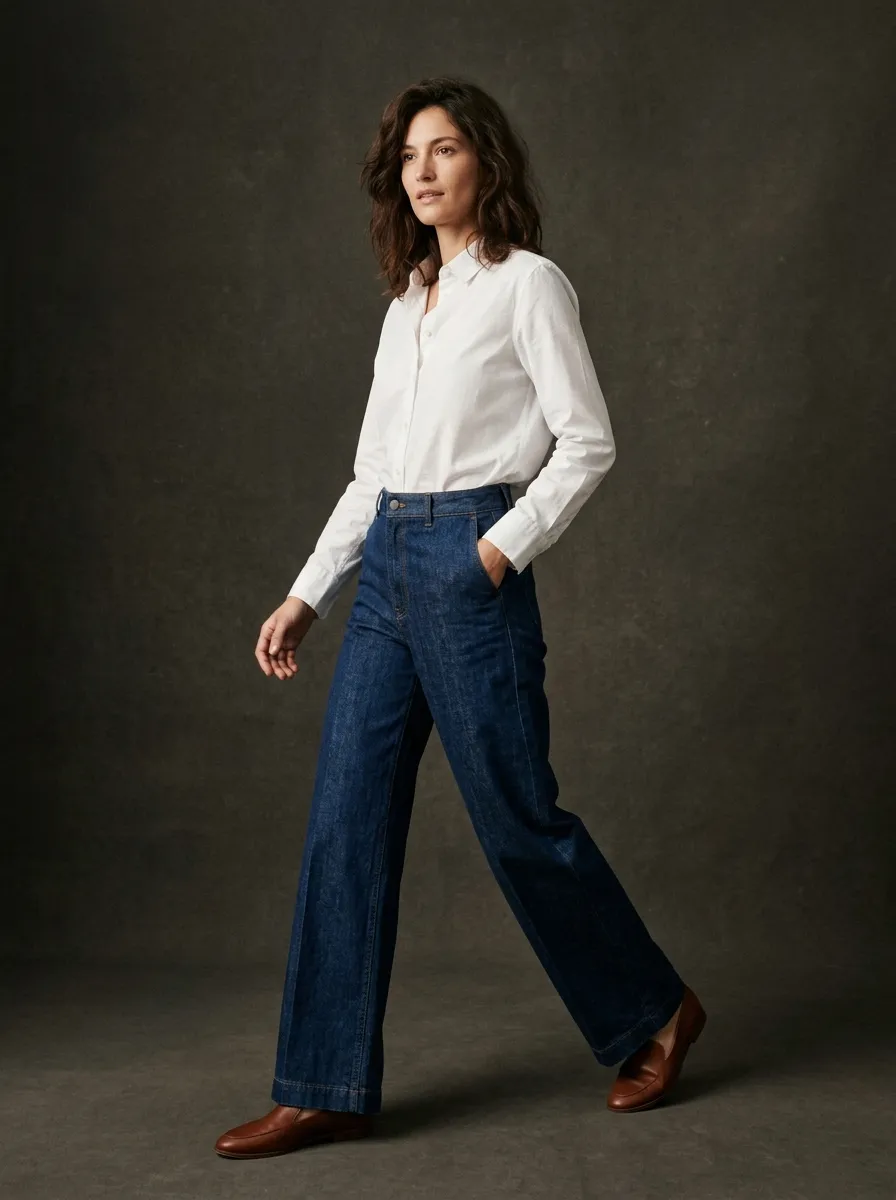
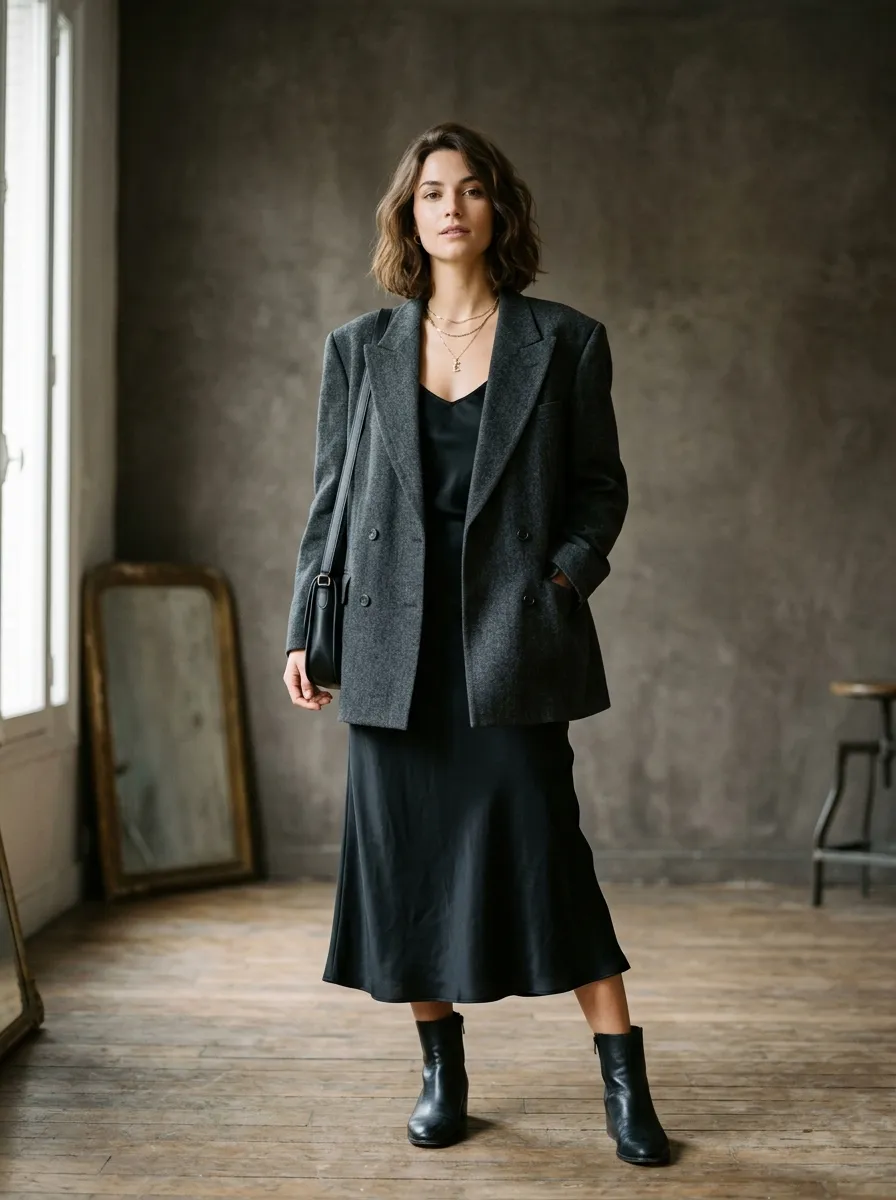
The cheapest money in a launch is the money you do not spend on samples of the wrong design. Describe a piece in your own words and see it as a product image, then pay only for the patterns of the pieces you keep.
Two free renders, shared across all our tools. No account.
What a production pattern costs here
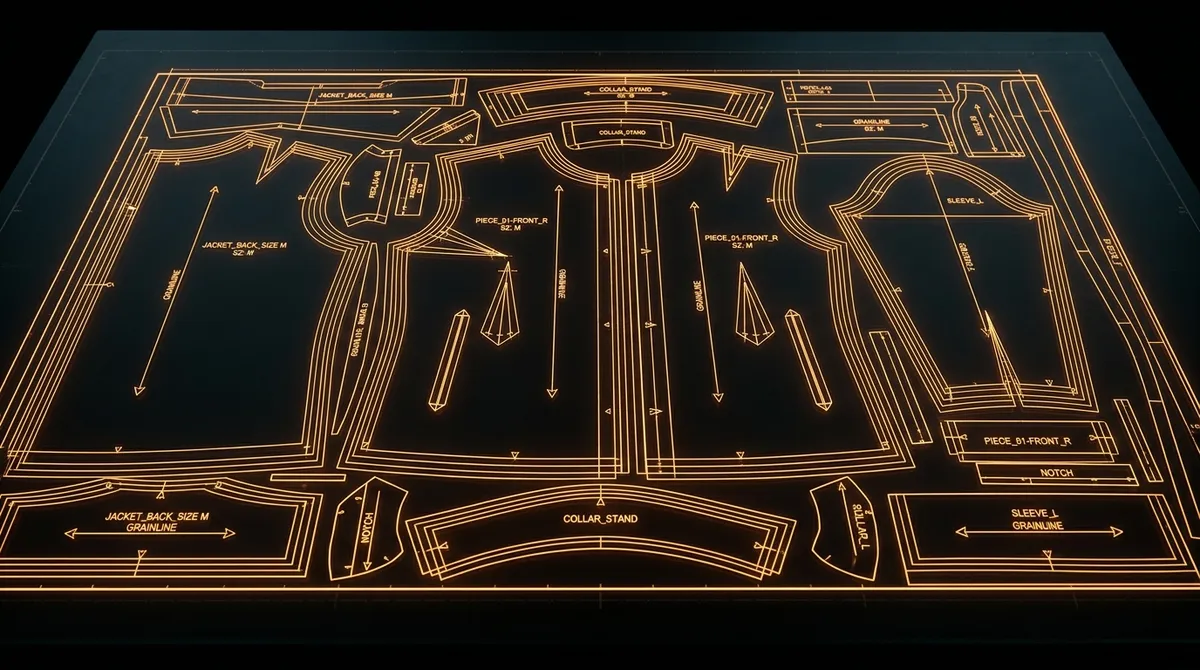
Each garment is cut by a professional pattern maker; the fee is set by its number of pieces, classified by our system, with the first revision included.
| Garment | Pieces | Fee |
|---|---|---|
| Simple, e.g. a t-shirt or a skirt | 2 to 6 | $29 |
| Standard, e.g. a hoodie or trousers | 7 to 15 | $59 |
| Complex, e.g. a coat or a tailored blazer | 16 or more | $129 |
What Does It Actually Cost to Start a Fashion Brand?
The fashion industry is full of myths about startup costs. Some influencers claim you can launch a brand for a few hundred dollars. Fashion business textbooks quote figures north of $100,000. The reality, as usual, lies somewhere in between and depends entirely on your business model, the complexity of your designs, and how willing you are to embrace new technology.
In 2026, the fashion startup landscape looks radically different from even five years ago. AI design tools have collapsed the cost of concepting and visualization by 80 to 95 percent. On-demand manufacturing has lowered MOQs from 500 units to as few as 10. Direct-to-consumer channels mean you no longer need wholesale relationships to reach customers. But production, materials, and marketing still cost real money, and underestimating those costs is the number one reason fashion startups fail.
This guide breaks down every expense category you will encounter when launching a fashion brand, compares traditional methods against AI-first approaches, and gives you realistic budgets at three price points: lean ($5,000), moderate ($20,000), and professional ($50,000+). Whether you are a fashion design graduate, a creative entrepreneur with a concept, or an existing business expanding into apparel, these numbers will help you plan accurately.
Pre-Production Costs: Design, Tech Packs, and Patterns
Pre-production is everything that happens before your garments are physically manufactured. This phase includes design concepting, technical documentation, fabric sourcing, and pattern development. Traditionally, these steps require hiring specialized freelancers or in-house staff. AI tools have dramatically reduced these costs for startups who know how to use them.
| Expense | Traditional Cost | AI-First Cost | Notes |
|---|---|---|---|
| Design & Sketching | $500 to $5,000 | $19 to $99/mo | Freelance fashion illustrator vs AI design platform. AI generates photorealistic concepts on the first pass. |
| Tech Packs (per style) | $150 to $500 | $10 add-on to a pattern order | Freelance technical designer vs a pattern-maker-authored factory tech pack with measurements, BOM and construction notes, added to the DXF pattern order. |
| Fabric Sourcing & Swatching | $200 to $1,000 | $200 to $1,000 | Physical swatches are still necessary. AI fabric simulation helps narrow choices before ordering samples. |
| Pattern Making (per style) | $200 to $600 | $29 to $129 | Traditional pattern maker vs Smasher Studio DXF service (AAMA/ASTM standard, grading available as a $15 add-on). |
| Colorway Exploration | $100 to $300 per style | ~$0.50 per variant | Physical dye samples vs AI colorway generation. Test 20 colors in minutes instead of weeks. |
| Total (10-style collection) | $5,000 to $18,000 | $500 to $2,500 | 70 to 90% savings on pre-production |
The biggest shift in pre-production costs comes from design concepting. A freelance fashion designer charges $50 to $150 per hour, and developing a single style from sketch to final rendering takes 4 to 10 hours. That means concepting a 10-style collection can cost $2,000 to $15,000 before you even think about physical samples. With AI tools, you can generate hundreds of photorealistic design concepts in a single afternoon for a fraction of the cost.
Pattern making is another area where startups overspend. A skilled pattern maker charges $200 to $600 per style depending on complexity. For a simple t-shirt, you might pay $200. For a structured blazer with lining, expect $400 to $600. Smasher Studio's DXF pattern service offers three tiers: Simple ($29, delivery in as little as 48 hours), Standard ($59, 72 hours), and Complex ($129, 5 days): first revision included on every tier, all in AAMA/ASTM DXF-2 format that manufacturers accept universally. Grading, marker layout, a factory tech pack and seam allowances are available as add-ons ($5 to $15).
Sampling Costs: Prototypes and Fit Samples
Sampling is where your designs become physical garments for the first time. Most brands go through two to four rounds of sampling before achieving production-ready fit and quality. Each round costs money and time, and cutting corners here leads to poor-quality products that damage your brand.
| Sampling Stage | Cost per Style | Timeline | Purpose |
|---|---|---|---|
| First Prototype | $200 to $1,000 | 2 to 4 weeks | Initial construction in approximate fabric. Validates pattern and basic fit. |
| Fit Sample | $150 to $500 | 2 to 3 weeks | Made in final fabric with corrections from prototype. Tests drape, feel, and precise fit. |
| Pre-Production Sample | $100 to $500 | 1 to 2 weeks | Final sample before bulk. Confirms all details, trims, labels, and finishing. |
| Sample Revisions (per round) | $100 to $500 | 1 to 3 weeks | Most styles require 1 to 3 revision rounds. Budget for at least 2 rounds. |
| Total (5-style collection) | $2,000 to $7,500 | 8 to 16 weeks | Assumes 2 revision rounds average |
Sampling costs are difficult to reduce because they involve physical materials and skilled labor. However, better pre-production work directly reduces sampling rounds. Brands that invest in accurate tech packs and digital prototyping typically need one fewer revision round per style, saving $500 to $2,500 across a small collection. When your manufacturer receives a detailed, professional tech pack with precise measurements and clear construction notes, the first sample comes back closer to your vision.
One strategy that works well for bootstrapped startups is to begin with simpler garments. A basic t-shirt, hoodie, or tote bag costs $200 to $300 to sample and is forgiving of minor fit issues. A structured blazer or pleated dress costs $500 to $1,000 to sample and requires more precise pattern work. Start with 3 to 5 simpler styles, prove market demand, then reinvest revenue into more complex designs.
Production Costs: Manufacturing Your Collection
Production is where startup costs escalate rapidly. Manufacturer minimum order quantities, fabric purchasing, trims, labels, packaging, and shipping all add up. Your per-unit cost depends on three primary factors: order quantity, garment complexity, and manufacturing location.
| Garment Type | 50 Units | 200 Units | 500 Units | 1,000+ Units |
|---|---|---|---|---|
| Basic T-Shirt | $12 to $18 | $8 to $14 | $5 to $10 | $3 to $7 |
| Hoodie / Sweatshirt | $20 to $35 | $15 to $25 | $10 to $18 | $7 to $14 |
| Trousers / Pants | $18 to $30 | $12 to $22 | $8 to $16 | $6 to $12 |
| Jacket / Outerwear | $35 to $80 | $25 to $55 | $18 to $40 | $12 to $30 |
| Dress (lined) | $25 to $60 | $18 to $40 | $12 to $28 | $8 to $20 |
| Accessories (bags, hats) | $8 to $25 | $5 to $18 | $3 to $12 | $2 to $8 |
These per-unit costs are for cut-and-sew manufacturing with the brand supplying the design and tech pack. Prices assume standard fabrics; premium or specialty fabrics (organic cotton, silk, Italian wool) can add 50 to 200 percent to material costs. Setup fees for screen printing, embroidery, or custom hardware typically range from $50 to $300 per style and are one-time costs amortized across the run.
For a first collection, most domestic manufacturers require MOQs of 50 to 100 units per style per colorway. If you have 5 styles in 2 colorways at 50 units each, that is 500 total units. At an average cost of $20 per unit for a mixed collection, your production run costs $10,000. Add $1,000 to $2,000 for labels, hang tags, poly bags, and shipping, and your total production budget is $11,000 to $12,000.
Print-on-demand (POD) eliminates upfront production costs entirely but limits you to basic garments (t-shirts, hoodies, tote bags) at per-unit costs that are 2 to 3 times higher than bulk manufacturing. POD is a valid strategy for testing designs and building an audience, but margins are thin: a POD t-shirt costing $15 to $20 cannot compete on price with a bulk-manufactured shirt at $5 to $8.
Photography and Content Creation Costs
Product photography and content creation are among the most underestimated costs for fashion startups. You need product photos for your e-commerce site, lifestyle imagery for social media, lookbook images for wholesale, and video content for marketing. This is also the category where AI delivers the most dramatic cost savings.
| Content Type | Traditional Cost | AI-Generated Cost | Savings |
|---|---|---|---|
| Studio Rental (per day) | $500 to $2,000 | $0 | 100% |
| Photographer (per day) | $500 to $3,000 | $0 | 100% |
| Models (per day) | $200 to $1,500 | $0 | 100% |
| Styling & Hair/Makeup | $300 to $1,000 | $0 | 100% |
| Product Photography (per image) | $25 to $100 | ~$0.50 | 95 to 99% |
| Video Content (per clip) | $500 to $5,000 | $10 to $30 | 95 to 99% |
| Photo Retouching (per image) | $5 to $25 | $0 | 100% |
| Total (10 styles, full content) | $5,000 to $25,000 | $50 to $500 | 95 to 99% |
A traditional photoshoot for 10 styles typically requires at least one full studio day plus a half-day for lifestyle shots. When you add photographer fees, model rates, styling, hair and makeup, studio rental, and post-production retouching, a single shoot easily costs $3,000 to $10,000. And you only get one set of images. If you want seasonal updates, different backgrounds, or video content, you need to book another shoot.
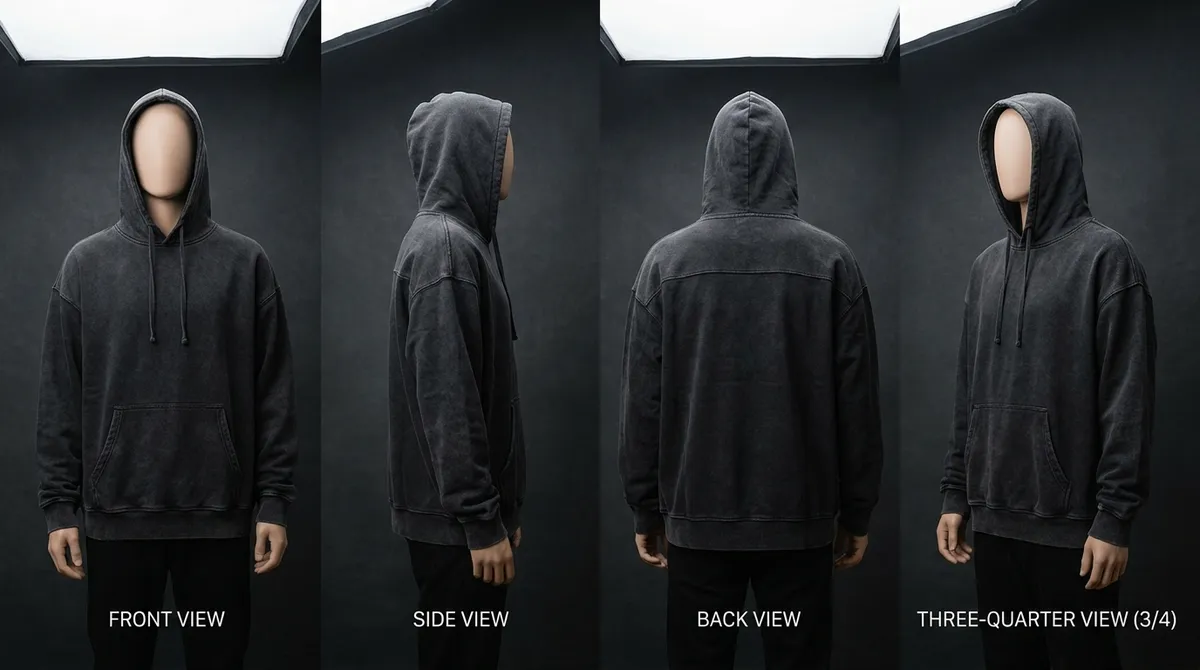
AI-generated content changes this equation entirely. With Smasher Studio, you can generate product photography at approximately $0.50 per image (5 credits at $0.10 each). That means 100 product images cost $50 instead of $2,500 to $10,000. Video content generation costs $4 to $45 per clip (40 to 450 credits) versus $500 to $5,000 for traditional video production. Multi-angle views for e-commerce (front, back, side and detail) cost 16 credits for a complete set instead of $100 to $400 with traditional photography.
The caveat: AI-generated content works best for pre-production visualization, social media content, lookbooks, and pitch materials. For your final e-commerce product pages, many brands still prefer real photography of actual garments. The smart approach is to use AI for everything until your products are physically manufactured, then invest in a focused product shoot for your website.
Business Operations and Legal Costs
Beyond the creative and production work, launching a fashion brand requires a real business foundation. These costs are often overlooked by first-time founders who focus exclusively on the product.
Legal & Formation
- LLC Formation$50 to $500
- Trademark Registration (USPTO)$250 to $750
- Business Insurance (annual)$500 to $2,000
- Care Label Compliance (FTC)$0 to $200
- Terms & Privacy Policy$0 to $1,000
- Subtotal$800 to $4,450
Technology & E-Commerce
- Domain Name (annual)$10 to $50
- Shopify / E-commerce Platform (monthly)$29 to $299
- Theme / Custom Design$0 to $5,000
- Email Marketing Platform (monthly)$0 to $50
- Accounting Software (monthly)$0 to $50
- Subtotal (first year)$360 to $9,800
LLC formation costs vary dramatically by state. Wyoming and Delaware are popular for fashion brands due to low fees and favorable business laws: formation costs as low as $100 including state filing fees. California and New York charge $800+ in annual franchise taxes on top of filing fees.
Trademark registration is not required but strongly recommended. A US trademark costs $250 to $350 per class through the USPTO's TEAS Plus system if you file yourself, or $750 to $2,000 if you hire a trademark attorney. The fashion industry has aggressive trademark enforcement, and discovering your brand name is already trademarked after you have printed labels and built a website is an expensive mistake.
For e-commerce, Shopify is the most popular platform for fashion startups at $29 to $79 per month for Basic to Advanced plans. A professional-looking free theme works fine for launch; do not spend $3,000 to $5,000 on a custom theme until your brand is generating consistent revenue. Many successful fashion brands launched with Shopify's free Dawn theme and upgraded later.
Marketing Launch Budget
Your product can be exceptional, but without marketing, nobody will know it exists. The fashion industry is intensely competitive: there are over 2 million fashion brands globally, and customer acquisition costs have risen steadily as social media platforms have shifted to pay-to-play models.
Pre-Launch (2 to 3 months before)
- Social media content creation: $0 to $500
- Brand identity package (logo, fonts): $200 to $2,000
- Influencer seeding (gifting product): $500 to $2,000
- Email list building (lead magnets): $0 to $300
- PR / press outreach: $0 to $3,000
Launch Month
- Paid social ads (Instagram/TikTok): $500 to $3,000
- Google Shopping ads: $200 to $1,000
- Micro-influencer partnerships: $200 to $2,000
- Launch event (optional): $500 to $5,000
- Email launch sequence: $0 to $200
The most effective marketing strategy for fashion startups in 2026 is content-led growth on Instagram, TikTok, and Pinterest. This requires a high volume of high-quality visual content, exactly where AI content creation shines. Brands using AI to generate social media content can post 3 to 5 times per day across platforms at virtually no incremental cost, where traditionally each piece of content might cost $50 to $200 to produce.
Paid advertising typically delivers the best return on investment when your brand already has social proof: reviews, followers, press mentions. For a cold launch, expect customer acquisition costs of $30 to $80 on Meta (Instagram/Facebook) and $15 to $50 on TikTok. These costs drop significantly as your brand builds organic following and word-of-mouth.
Total Cost Comparison: Traditional vs AI-First
Here is the complete picture. This comparison assumes a 5-style collection launching direct-to-consumer in the United States.
| Category | Traditional | AI-First |
|---|---|---|
| Design & Pre-Production | $5,000 to $18,000 | $500 to $2,500 |
| Sampling | $2,000 to $7,500 | $1,500 to $5,000 |
| Production (50 units/style) | $5,000 to $15,000 | $5,000 to $15,000 |
| Photography & Content | $5,000 to $25,000 | $50 to $500 |
| Business & Legal | $1,200 to $14,000 | $1,200 to $5,000 |
| Marketing Launch | $2,000 to $15,000 | $1,000 to $5,000 |
| Grand Total | $20,200 to $94,500 | $9,250 to $33,000 |
AI-first approach reduces total startup costs by 45 to 65 percent, primarily through savings in design, pre-production, and content creation. Production costs remain similar because physical manufacturing has not been disrupted by AI, yet.
How to Start a Fashion Brand for Under $5,000
If you are working with a tight budget, here is a realistic roadmap to launch a legitimate fashion brand for under $5,000. This is not a print-on-demand shortcut, it is a real brand with real products, just launched strategically.
Month 1: Design and Validate ($300)
- Sign up for Smasher Studio Creator plan ($19/month): 350 credits for AI design
- Generate 50+ design concepts across 10 to 15 styles
- Create AI lookbook images and share on Instagram for feedback
- Survey your audience: which 3 to 5 styles would they actually buy?
- Estimated cost: $19 (Smasher Studio) + $200 (branding/logo) + $50 (domain) = $269
Month 2: Pre-Production ($500)
- Order DXF patterns for your top 3 styles through Smasher Studio ($29 to $129 each), with the factory tech pack as a $10 add-on
- Source fabric swatches from 3 to 5 suppliers (~$200)
- Set up Shopify Basic ($29/month) with free theme
- Estimated cost: $500
Month 3: Sampling ($1,200)
- Find a local manufacturer (lower MOQs, faster communication)
- Order prototypes for 3 styles ($200 to $400 each)
- One round of revisions ($100 to $200 each)
- Estimated cost: $900 to $1,200
Month 4: Production + Launch ($2,800)
- Produce 30 to 50 units per style (3 styles = 90 to 150 units)
- Production cost at ~$15/unit average = $1,350 to $2,250
- Labels, packaging, shipping: $200 to $300
- Launch marketing (organic + $200 paid): $200
- Estimated cost: $1,750 to $2,750
Total estimated cost: $2,820 to $4,720. This gets you a real brand with 3 styles, 90 to 150 physical units, a functioning e-commerce store, and AI-generated marketing content. The key tradeoffs are fewer styles, smaller production runs (higher per-unit cost), and limited paid marketing. But you have a real product in customers' hands and can reinvest revenue into growing the collection.
Frequently Asked Questions
How much does it cost to start a fashion brand from scratch?+
What is the biggest expense when starting a clothing brand?+
Can I start a fashion brand with $1,000?+
How much do tech packs cost for a fashion startup?+
Is it cheaper to manufacture clothing overseas or domestically?+
How much should I budget for fashion brand marketing?+
What ongoing costs does a fashion brand have after launch?+
How long does it take to break even with a fashion brand?+
Related Guides
How to Find a Clothing Manufacturer
Step-by-step guide to finding and vetting garment manufacturers, domestic and overseas.
AI Fashion Design Tools
Design entire collections with AI, from concept sketches to photorealistic product images.
Smasher Studio Pricing
Compare Creator, Studio, and Pro plans. Start free with a one-time welcome of 50 credits when you create your account, then 15 credits a month.
Cut Your Fashion Startup Costs by 70%
Smasher Studio gives you AI-powered design, tech packs, product photography, video, and pattern making: everything you need to go from concept to manufacturer-ready at a fraction of traditional costs. Start free, no credit card required.