Poplin, twill or jersey: what can AI show me about my cotton?
Which cloth it is and how it shapes a garment: one photo of your cotton becomes six pieces, a crisp shirt from a poplin, a tee from a jersey, trousers from a twill. How it shrinks, softens and fades in the wash, the render cannot tell you. Two free renders, shared across all our tools. No account.
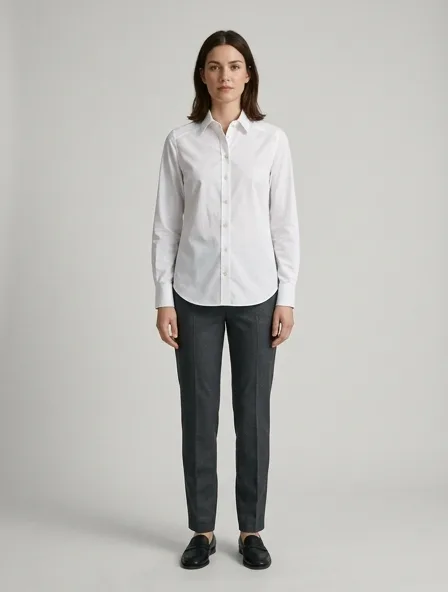
Six ideas for your fabric. Your free renders go first (two across all our tools), then sign in free to render the rest.
Your photo is stored for 30 days, then deleted. It is used to make your image, and by the studio if you continue there. If you order a pattern from it, a copy is kept with your order.
What a render reads from cotton
Cotton is matte, so the render cannot lean on shine; it leans on texture and structure instead. A poplin shows a tight, flat face and presses into sharp collars. A twill carries a diagonal line and a little more body. An oxford has its small basket texture, a canvas a coarse grid, a voile an open, almost sheer weave. A clear close photo lets the render tell them apart.
Knit or woven is the biggest difference it shows. Cotton jersey drapes, clings and rolls at a raw edge; woven cotton holds its own shape and creases at the elbow. The tool proposes garments that suit what it sees, so a jersey photo leads toward tees and dresses and a canvas photo toward jackets.
Color reads well on cotton because the surface is even and does not glare. That makes it a good cloth to judge a palette on before you dye a bulk order.
What the wash decides
- Shrinkage: unwashed cotton can shrink by several percent, more in length than in width. Ask the mill for the figure and whether the cloth is preshrunk before the pattern is graded.
- Hand: combed, long-staple cotton feels smoother and pills less than carded cotton of the same weight. They can look identical in a photo.
- Garment dyeing and washing soften the color and the surface; a render shows the cloth as it is in the photo, before any wash.
- Certification: organic and recycled cotton look the same as conventional. The claim rests on the mill's certificate.
The cotton cloths and what they make
Cotton covers the widest range of any fiber on this site, from a near-sheer voile to a jacket canvas. The cloth, more than the fiber, decides the garment.
| Cloth | Typical weight | Usual garments | In a render |
|---|---|---|---|
| Voile and lawn | About 60 to 100 GSM | Summer blouses, scarves, linings | Lightness reads; sheerness varies with the light |
| Poplin | About 90 to 130 GSM | Shirts, shirt dresses | Crisp edges and flat face read well |
| Jersey | About 140 to 220 GSM | T-shirts, tank tops, soft dresses | Cling and drape read; stretch does not |
| Twill and chino | About 200 to 320 GSM | Trousers, skirts, workwear | Diagonal line reads in close views |
| Canvas | About 250 to 400 GSM | Jackets, chore coats, bags | Stiff body and grid read well |
| Fleece | About 280 to 450 GSM | Sweatshirts, hoodies, joggers | Bulk reads; the brushed inside does not show |
How to photograph cotton for the tool
Iron the swatch first: creases from the post are the one thing a cotton photo picks up too faithfully. Shoot flat, in even daylight, close enough for the weave to be legible, and leave one corner turned back so the render can see the thickness and the reverse side.
Questions
Can AI tell poplin from twill in a photo?
Usually, if the photo is close and sharp: poplin shows a flat, fine face and twill a diagonal line. From a distance or in a soft photo the two can blur together, so name the cloth in your notes as well.
What GSM is a good cotton T-shirt?
As a typical trade range, light tees sit around 140 to 160 GSM, everyday tees around 160 to 200 and heavyweight tees above 200. Heavier jersey hangs straighter and is less see-through; lighter jersey drapes and breathes more.
Will my cotton garment look like the render after washing?
Not quite: washing softens, shrinks and can fade cotton. Treat the render as the garment on the day it is made, and wash-test a sample before you approve bulk.
What does it cost?
The read of your cotton and the six garment ideas are free. Two free renders, shared across all our tools. No account. Then 5 credits ($0.50) a render; a free account opens with a one-time welcome of 50 credits, then gets 15 credits a month. Rendering all six is 30 credits.