Cotton fabric guide
Cotton Tunic Design with AI
For a cotton tunic, most mills quote cotton poplin at 90 to 130 g/m²: a classic pairing.
Of the 12 cloths this guide lists for this cut, it sits between charmeuse satin and polyester crepe in weight.
Next to polyester crepe, it is more matte and less stretchy.
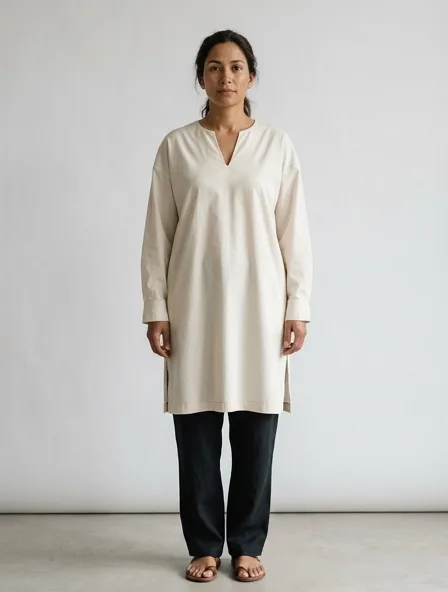
Cotton Tunic at a glance
- Cloth to ask your mill for
- Cotton poplin
- Typical weight
- 90 to 130 g/m²
- Drape
- Medium
- Stretch
- None
- Breathability
- High
- Warmth
- Neutral
- Care
- Machine wash at 30 to 40 °C
- How common
- A classic pairing
- Typical cloth price
- $5-15/yard
Typical trade ranges, not one mill's figures: confirm them with your mill.
The tunic, in numbers
- Typical length
- 75 to 90 cm, from the high point of the shoulder
- Defining details
- Side slits, split neck, long or three-quarter sleeves, hip to thigh length
- Cloth needed
- about 1.6 to 2.2 m of 150 cm cloth, roughly $9 to $36 of cloth at typical prices
Typical figures for an adult size M. The pattern tier is set from the real piece count when you order.
How cotton behaves on a tunic
On a tunic it keeps a clean, even line from shoulder to hem, the hand most tops are graded on.
Cut long, a medium-weight cloth falls in a clean column and needs a deep hem to hang straight.
It is neither warm nor cool, so it works across most of the year.
Care is simple: a machine wash at 30 to 40 °C.
It creases moderately and can shrink by a few percent unless the cloth was pre-shrunk, so ask the mill whether it was.
About cotton
Cotton is a plant fibre spun into everything from fine poplin to heavy canvas. It breathes, absorbs moisture and softens with each wash, which is why it is the default cloth for everyday clothing.
Long-staple cottons such as Egyptian or Pima give a smoother, stronger cloth; organic and recycled cottons are widely available at a premium.
It rarely needs a lining, though a light cotton is lined or faced when a pale color would show what is underneath.
Cutting, sewing and color
Sew it with a universal 80/12 needle; flat-felled or overlocked seams both hold, and it presses well with steam.
It takes reactive dyes readily, so solid colors and prints both stay true after washing.
Its surface is matte, so it photographs evenly under flat light.
A description to start from
A tunic in cotton poplin, 90 to 130 g/m², with a medium drape and a matte surface, for most of the year.
If cotton is not quite right
- Lighter: Satin, in charmeuse satin
- Heavier: Wool, in wool challis
- Warmer: Leather, in lamb nappa leather
- More drape: Silk, in silk crêpe de Chine
Also: how the studio works, prices and questions and answers.
Start free