How do I turn an AI fashion design into a real garment?
A factory cannot sew from an image: it needs a flat sketch, a pattern and a tech pack, then it makes a first sample you fit and correct. Read the design into a flat sketch, have a pattern maker cut the pattern, add the specification, and take the files to a sample maker, checking at each step that what the image shows can actually be built.
The four steps from an image to a sample
Each step turns something a person can look at into something a workshop can measure. Skip one and the next person guesses, and a guess is paid for in samples.
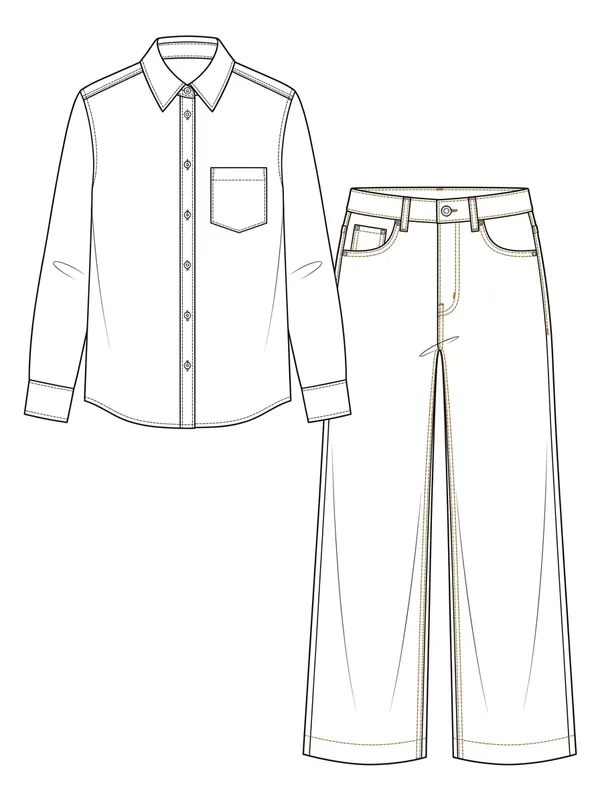
- A flat sketch. The design redrawn as line art, front and back, with every seam, pocket, closure and topstitch where it will be. It is where an image meets reality: a seam that cannot exist, a pocket with no opening, a closure that cannot be reached all show up here.
- A pattern. The cutting geometry of every piece: closed shapes, notches that match, grainlines, ease. It is drafted by a pattern maker in your base size and delivered as a DXF file that cutting systems read.
- A tech pack. The specification the workshop builds and quotes from: the bill of materials, the fabric and its weight, the trims, a size chart with points of measure, construction notes and the colors.
- A first sample. A sample maker or a factory sews one garment from the pattern and the tech pack. You fit it on a body, mark what to change, the pattern is corrected, and a second sample follows if needed.
What to check in the image before you spend anything
An image model draws what looks right, not what can be cut and sewn. Before the first paid step, look for:
- Seams and openings that make sense: where does the garment open, and can a person get into it?
- Fabric that matches the shape. A crisp sculpted volume in a fabric that drapes like jersey will not hold; name the real fabric you intend.
- Details at a real scale: buttons, zips and pockets that could be bought and sewn at that size.
- The back. Most generated designs show only the front; decide the back before the pattern is drafted.
- Symmetry and repeats: a print that would need a placement plan, a stripe that has to match at the seams.
How the chain runs here
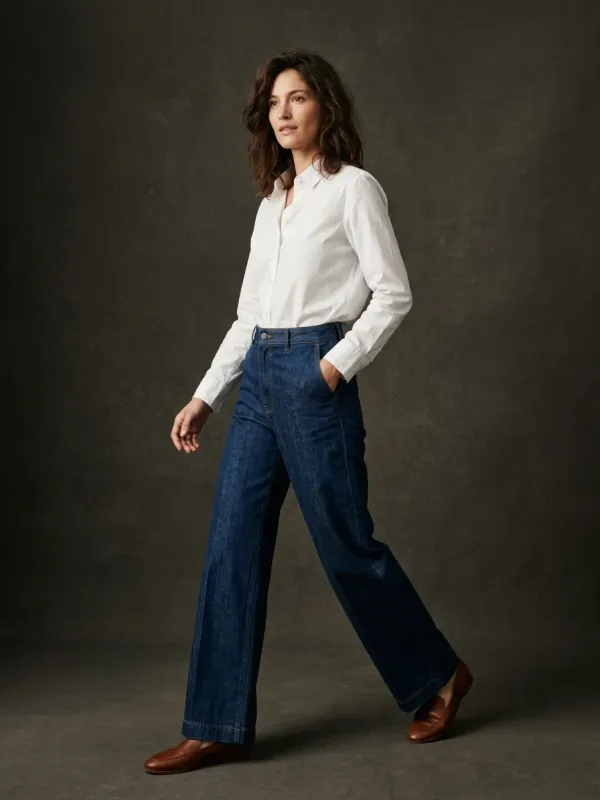
Drop the design image, or a photo of a garment you made from it, on the tech pack page. It returns the flat sketch and a written read of the garment: type, silhouette, visible construction, closures, a hedged guess at the fabric, and a count of the pattern pieces. That count sets the pattern quote. The figure below is our own demo: a photo in, and the flat sketch read from it.
The pattern itself is cut by a professional pattern maker, never by the image model: $29 for a simple garment of 2 to 6 pieces, $59 for 7 to 15, $129 for 16 and more, with one revision. The factory tech pack is an add-on at $10, written by the same maker, and grading across your sizes an add-on at $15. The tier is classified by the system from the garment, and the order confirms it before you pay.
Finding the workshop that sews the sample
We do not sew samples and we do not recommend a factory: the right workshop depends on the garment, the fabric, your quantities and where you are. Ask a sample maker three questions before you send files: whether they work from DXF patterns and a tech pack, what one sample costs, with or without the fabric, and what their minimum order is after the sample. Our guide to finding a manufacturer goes through the rest.
For jeans in particular, the tech pack carries what a denim workshop asks first: the fabric weight in ounces, the stretch, the wash, the rivets and the thread color. A generated image cannot tell them any of it.
What reading the design costs
Your first 2 renders are free, shared across all our tools, with no account, and each includes its garment read. After that a render is 5 credits ($0.50) and each garment read 1 credit; a free account opens with a one-time welcome of 50 credits, then gets 15 credits a month. The pattern is paid in dollars at checkout, only when you order it.
Read your design into a flat sketch and a pattern quote
Drop the design image. You get the flat sketch, the garment read and the pattern tier in about twenty seconds, before you decide anything.
Questions
Can a factory make clothes from an AI image?
Not from the image alone. A factory works from a pattern and a tech pack; the image shows what the garment should look like, not how to cut and sew it.
Can AI make the sewing pattern from my design?
Not one a factory can cut. An image model reads the garment and counts its pieces, but a production pattern is measured geometry, so here a professional pattern maker cuts it, from $29.
Do I need a tech pack for a first sample?
A short one helps every time: the fabric, the trims and the measurements you want. The full factory tech pack, with a size chart and construction notes, matters most when you ask for a production quote.
How many samples should I expect?
Plan for at least two: the first shows what to correct in the fit and the construction, the second confirms it. A garment with a simple construction sometimes gets there in one.
Can I take the pattern files to any workshop?
Yes. The pattern comes as an AAMA/ASTM DXF-2 file, the apparel standard that cutting systems import without redrawing. Ask the workshop which format it reads before you order, to be sure.