Satin fabric guide
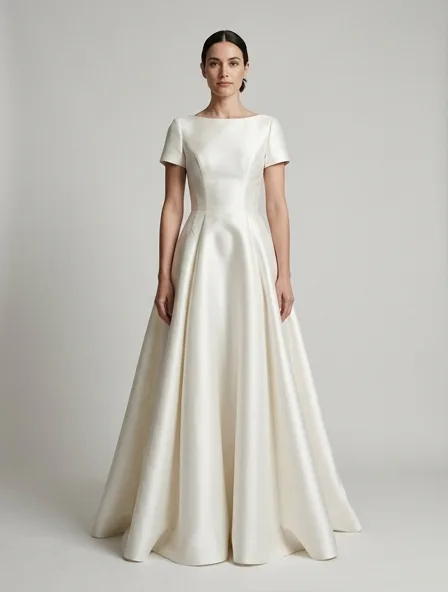
Satin Gown Design with AI
For a satin gown, most mills quote duchess satin at 180 to 300 g/m²: a classic pairing.
Of the 10 cloths this guide lists for this cut, it sits between midweight linen and scuba knit in weight.
Next to midweight linen, it is heavier, more fluid, shinier and warmer to wear.
Studio films

Satin Gown at a glance
- Cloth to ask your mill for
- Duchess satin
- Typical weight
- 180 to 300 g/m²
- Drape
- Fluid, falls close to the body
- Stretch
- None
- Breathability
- Low
- Warmth
- Neutral
- Care
- Dry clean
- How common
- A classic pairing
- Typical cloth price
- $8-25/yard
Typical trade ranges, not one mill's figures: confirm them with your mill.
The gown, in numbers
- Typical length
- 145 to 160 cm, from the high point of the shoulder
- Defining details
- Boned bodice, full-length skirt, train, lining and interlining
- Cloth needed
- about 4.0 to 7.0 m of 150 cm cloth, roughly $35 to $190 of cloth at typical prices
Typical figures for an adult size M. The pattern tier is set from the real piece count when you order.
How satin behaves on a gown
Cut into gowns, it follows the body and moves with every step; a bias cut clings more, so plan the ease before the render.
Cut long, a fluid cloth pools and trails, and its weight pulls the hem down, so it is hung for a day before hemming.
It is neither warm nor cool, so it works across most of the year.
The finished piece is usually labelled dry clean only.
The floats snag on jewellery and rough surfaces, and water marks show, which makes it an occasion cloth.
About satin
Satin is a weave, not a fibre: long floating yarns on the face give a smooth, glossy surface over a dull back. It is woven in silk, polyester, acetate and blends.
Duchess satin for bridal wear is a specialist product; charmeuse satin is made widely, in polyester and in silk.
Satin dresses are often lined or underlined, because the floats are delicate and the cloth shows every line beneath it.
Cutting, sewing and color
A fine microtex needle, pins only in the seam allowance and a walking foot; it slips, so cut it single layer.
The sheen lifts color, so a satin and a matte cloth from the same dye lot will not look alike.
Its high sheen catches every fold, so light it from the side and keep the background quiet.
A description to start from
A gown in duchess satin, 180 to 300 g/m², with a fluid drape and a high sheen surface, for most of the year.
If satin is not quite right
- Lighter: Linen, in midweight linen
- Heavier: Neoprene, in scuba knit
- Warmer: Velvet, in silk and viscose velvet
- Easier to care for: Polyester, in polyester satin
- More structure: Organza, in organza
Also: how the studio works, prices and questions and answers.
Start free