Polyester fabric guide
Polyester Gown Design with AI
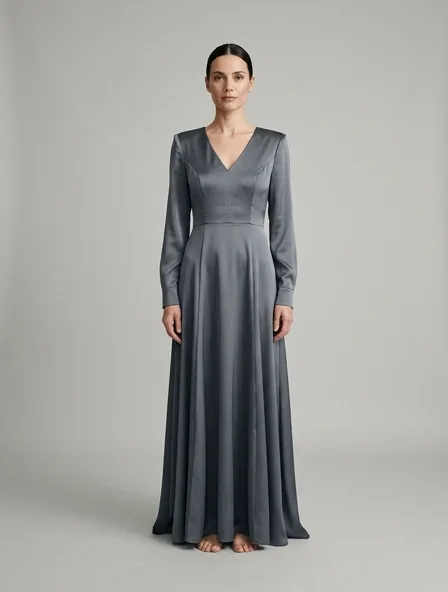
Mills make polyester gowns regularly, usually in polyester satin at 120 to 200 g/m².
Of the 10 cloths this guide lists for this cut, it sits between organza and cotton sateen in weight.
Next to cotton sateen, it is lighter, shinier and stretchier.
Studio films

Polyester Gown at a glance
- Cloth to ask your mill for
- Polyester satin
- Typical weight
- 120 to 200 g/m²
- Drape
- Medium
- Stretch
- Slight
- Breathability
- Low
- Warmth
- Neutral
- Care
- Machine wash at 30 to 40 °C
- How common
- Common
- Typical cloth price
- $3-12/yard
Typical trade ranges, not one mill's figures: confirm them with your mill.
The gown, in numbers
- Typical length
- 145 to 160 cm, from the high point of the shoulder
- Defining details
- Boned bodice, full-length skirt, train, lining and interlining
- Cloth needed
- about 4.0 to 7.0 m of 150 cm cloth, roughly $13 to $92 of cloth at typical prices
Typical figures for an adult size M. The pattern tier is set from the real piece count when you order.
How polyester behaves on a gown
Cut into gowns, it holds a clean A-line or shift shape without looking stiff.
Cut long, a medium-weight cloth falls in a clean column and needs a deep hem to hang straight.
It is neither warm nor cool, so it works across most of the year.
Care is simple: a machine wash at 30 to 40 °C.
It barely creases, dries fast and keeps its color, but it holds odour and can pill on brushed surfaces.
About polyester
Polyester is a synthetic fibre made from petroleum or, more and more, from recycled bottles. It can be engineered to imitate silk, wool or cotton, and to wick, stretch or shed water.
Recycled polyester is widely available and certified under recycling standards; ask the mill for the certificate, not only the claim.
It is itself the usual lining cloth; a polyester piece is lined only when it is sheer or when the face would cling.
Cutting, sewing and color
A microtex needle and polyester thread; it resists pressing, so seams are set with heat and a clapper.
It is dyed with disperse dyes at high heat or printed by sublimation, so bright colors stay fast.
It has a soft sheen that shows the folds without glare.
A description to start from
A gown in polyester satin, 120 to 200 g/m², with a medium drape and a soft sheen surface, for most of the year.
If polyester is not quite right
- Lighter: Chiffon, in chiffon
- Heavier: Cotton, in cotton sateen
- Warmer: Velvet, in silk and viscose velvet
- More drape: Silk, in silk duchess satin
Also: how the studio works, prices and questions and answers.
Start free