Linen fabric guide
Linen Blouse Design with AI
For a linen blouse, most mills quote shirting linen at 110 to 170 g/m²: a classic pairing.
Of the 12 cloths this guide lists for this cut, it sits between wool challis and single jersey in weight.
Next to wool challis, it is heavier, firmer, cooler to wear and easier to care for.
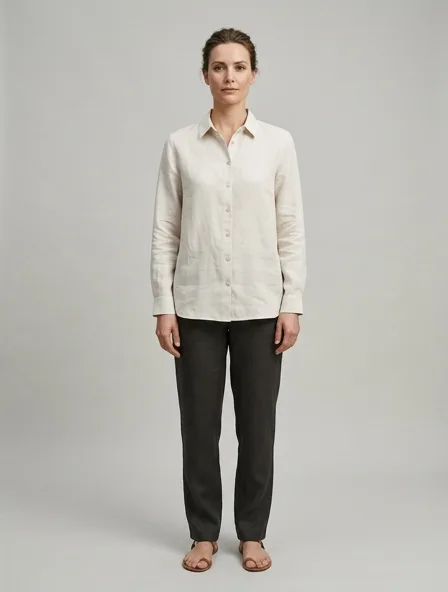
Linen Blouse at a glance
- Cloth to ask your mill for
- Shirting linen
- Typical weight
- 110 to 170 g/m²
- Drape
- Crisp, stands away from the body
- Stretch
- None
- Breathability
- High
- Warmth
- Cool to wear
- Care
- Machine wash at 30 to 40 °C
- How common
- A classic pairing
- Typical cloth price
- $10-30/yard
Typical trade ranges, not one mill's figures: confirm them with your mill.
The blouse, in numbers
- Typical length
- 58 to 68 cm, from the high point of the shoulder
- Defining details
- Bow neck, gathered or puffed sleeves, buttons at the back or front, soft pleats
- Cloth needed
- about 1.4 to 2.0 m of 150 cm cloth, roughly $15 to $66 of cloth at typical prices
Typical figures for an adult size M. The pattern tier is set from the real piece count when you order.
How linen behaves on a blouse
On a blouse it stands slightly away from the body, so collars and cuffs hold their shape and a boxy cut stays boxy.
At this length a crisp cloth holds a clear A-line and rustles as it moves.
It wears cool, which makes it a spring and summer fabric.
Care is simple: a machine wash at 30 to 40 °C.
It creases quickly and visibly, which is part of its character; a blend with viscose or cotton creases less.
About linen
Linen is spun from the flax plant, one of the oldest textile fibres. It is strong, cool to wear and crisp at first, softening with every wash.
Most European flax is grown in France, Belgium and the Netherlands, then spun and woven in Europe or in China.
It is usually left unlined in summer pieces; a tailored linen jacket takes a half lining at most.
Cutting, sewing and color
A 70/10 to 80/12 needle; it frays, so finish seams with an overlock or French seams, and press while damp.
It takes dye well but softly, so colors read slightly washed, which is part of its look.
Its surface is matte, so it photographs evenly under flat light.
A description to start from
A blouse in shirting linen, 110 to 170 g/m², with a crisp drape and a matte surface, for spring and summer.
If linen is not quite right
- Lighter: Wool, in wool challis
- Heavier: Jersey, in single jersey
- Warmer: Leather, in lamb nappa leather
- More drape: Silk, in silk crêpe de Chine
Also: how the studio works, prices and questions and answers.
Start free