What goes in a tech pack for ties?
The drawing, the materials and hardware, the finished measurements and the construction notes a specialist maker quotes from. Drop one photo of your tie and get its technical flat, free with no account; the pattern itself is made by the maker, not drafted here.
Drop your tie photo here
or choose one from your phone or computer
JPEG, PNG or WebP. Any phone photo works.
Your photo is stored for 30 days, then deleted. It is used to make your image, and by the studio if you continue there. If you order a pattern from it, a copy is kept with your order.
On this platform the AI does the design and visualisation work and a human pattern maker cuts the pattern. That split is deliberate. How the pattern is made.
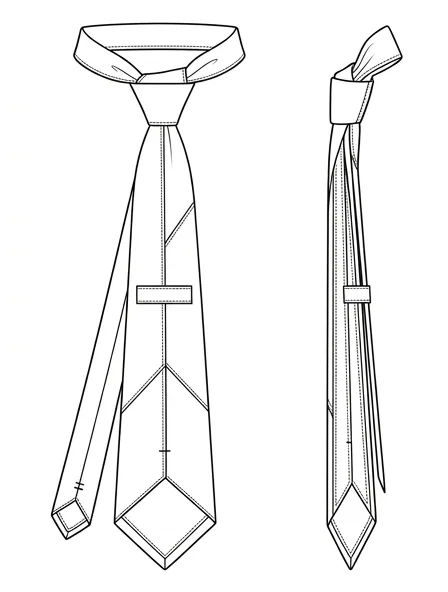
Tech Pack for a tie
A tech pack for ties is the brief a specialist maker quotes from: the drawing, the materials, the measurements and how the piece is put together.
Measure a tie you like and write its finished dimensions and hardware sizes into the pack; the maker builds the pattern from them.
Most ties start from silk jacquard; charmeuse satin is the less usual line on a bill of materials.
What you get
A technical flat of your tie, drawn from one photo in black line on white, ready for the materials and measurements of your tech pack.
Step by step
- Photograph the tie from the front, laid flat, in daylight.
- Get its technical flat from the flat sketch tool.
- Add the materials, trims and hardware, with their sizes.
- Send the pack to a specialist maker for a quote and a sample.
A common mistake
Sending a maker a picture with no measurements: the sample comes back in the size the maker guessed.
Bill of materials lines for ties
- Silk jacquard
- 130 to 200 g/m²; dry clean
- Polyester jacquard
- 120 to 180 g/m²; machine wash at 30 to 40 °C
- Charmeuse satin
- 100 to 140 g/m²; dry clean
Typical trade ranges, not one mill's figures: confirm them with your mill.
The tie, in numbers
A tie is cut on the bias from three pieces with an interlining, then folded and slip-stitched. Its width and the weave of its cloth decide how it knots.
- Pattern pieces
- about 3 to 4
- Cloth needed
- about 0.4 to 0.6 m of 150 cm cloth
Typical figures for an adult size M.
Also: how the studio works, prices and questions and answers.
Start free