Create with AI
How can I design ponchos with AI?
Describe your poncho in plain words in the studio and get a photorealistic image of the design, with no design software and no sample.
On this platform the AI does the design and visualisation work and a human pattern maker cuts the pattern. That split is deliberate. How the pattern is made.
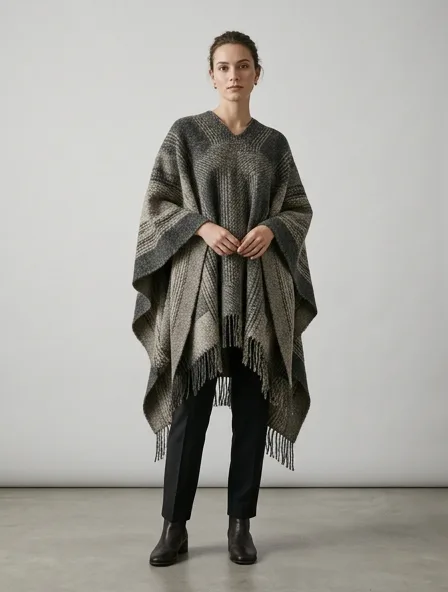
Design for a poncho
A design render turns a written description of your poncho into a photorealistic image, so a silhouette, a neckline or a pocket can be judged before anyone cuts cloth.
Name the length, the fit and the neckline first; those three decide whether a poncho reads right on a body.
What you get
A photorealistic image of the poncho, back in seconds, that you can refine in the same conversation.
Step by step
- Say who the poncho is for and where it will be worn.
- Give the cloth, the color and the one detail that matters most: a neckline, a pocket, a hem.
- Ask for one change at a time and compare the versions.
- When the design is settled, keep it in a collection and move on to photos or a pattern.
A common mistake
Describing ten details at once: the image honours some and drops others. Two or three per request work better.
Cloths to name when you describe ponchos
- Cotton gabardine
- A classic pairing, 200 to 300 g/m²
- Wool melton
- A classic pairing, 450 to 750 g/m²
- Double-face cashmere
- A classic pairing, 500 to 800 g/m²
- Wool tweed
- A classic pairing, 450 to 650 g/m²
Typical trade ranges, not one mill's figures: confirm them with your mill.
The poncho, in numbers
A poncho is a flat piece of cloth with an opening for the head, sometimes joined at the sides. It is among the simplest garments to pattern, so the cloth and its edges do the work.
- Defining details
- Head opening, fringed or bound edges, optional hood
- Key measurements
- Shoulder width and length
Typical figures for an adult size M. The pattern tier is set from the real piece count when you order.
Also: how the studio works, prices and questions and answers.
Start free