Minimalist fashion
Minimalist Dress Design with AI
Minimalism keeps only what the garment needs: clean lines, few details and a neutral palette.
For a minimalist dress, ask for wool crepe (180 to 260 g/m²) or cotton poplin (90 to 150 g/m²).
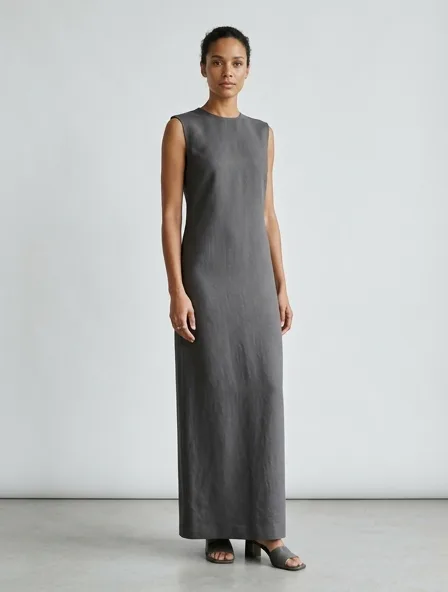
The look
- Palette
- White, stone, grey and black
- Details
- Hidden plackets, concealed zips and no visible logo
- Silhouette
- Clean and straight, either close or deliberately boxy
- Finish
- Matte surfaces, pressed seams and tonal stitching
- Styling
- Tone on tone, one shape per outfit
- Worn for
- Work and everyday wear
- Avoid
- Contrast stitching, visible hardware and prints
- Who wears it
- 25 to 45, design-minded buyers building a capsule wardrobe
The dress, in numbers
- Defining details
- Waist seam or princess seams, neckline, sleeve, zip or buttons
- Key measurements
- Bust, waist and hip
Typical figures for an adult size M. The pattern tier is set from the real piece count when you order.
Making a minimalist dress
Seams are pressed open and edges finished with facings or bindings, so nothing on the inside shows on the outside.
Look for matte, solid-colored cloths with enough body to hold a clean line: wool crepe, cotton poplin, heavy jersey.
Cloths that suit a minimalist dress
- Wool crepe
- 180 to 260 g/m², a classic pairing
- Cotton poplin
- 90 to 150 g/m², a classic pairing
- Midweight linen
- 150 to 220 g/m², a classic pairing
- Viscose jersey
- 160 to 220 g/m², a classic pairing
Typical trade ranges, not one mill's figures: confirm them with your mill.
A description to start from
Minimalist dress in wool crepe. Palette: white, stone, grey and black. Details: hidden plackets, concealed zips and no visible logo. Silhouette: clean and straight, either close or deliberately boxy.
Also: how the studio works, prices and questions and answers.
Start free