Athletic fashion
Athletic Dress Design with AI
Athletic style is built for movement first, with sport details worn well beyond the gym.
For a athletic dress, ask for polyester crepe (110 to 170 g/m²) or viscose jersey (160 to 220 g/m²).
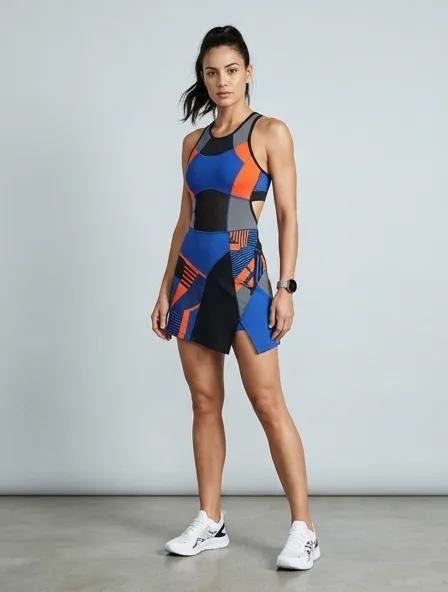
The look
- Palette
- Black, white and one bright performance color
- Details
- Flatlock seams, reflective trims, mesh panels and taped zips
- Silhouette
- Close to the body or cut for movement
- Finish
- Technical and quick-drying, with bonded edges
- Styling
- Performance pieces with one casual layer
- Worn for
- Training, commuting and weekends
- Avoid
- Cloths that hold sweat or restrict movement
- Who wears it
- 18 to 45, active buyers
The dress, in numbers
- Defining details
- Waist seam or princess seams, neckline, sleeve, zip or buttons
- Key measurements
- Bust, waist and hip
Typical figures for an adult size M. The pattern tier is set from the real piece count when you order.
Making a athletic dress
Flatlock or bonded seams lie flat against the skin, and panels are placed where the body moves and sweats.
Look for stretch and recovery first: polyester and elastane, technical jersey, mesh where it needs air.
Cloths that suit a athletic dress
- Polyester crepe
- 110 to 170 g/m², common
- Viscose jersey
- 160 to 220 g/m², a classic pairing
- Scuba knit
- 280 to 380 g/m², common
- Cotton poplin
- 90 to 150 g/m², a classic pairing
Typical trade ranges, not one mill's figures: confirm them with your mill.
A description to start from
Athletic dress in polyester crepe. Palette: black, white and one bright performance color. Details: flatlock seams, reflective trims, mesh panels and taped zips. Silhouette: close to the body or cut for movement.
Also: how the studio works, prices and questions and answers.
Start free