Create with AI
How can I design capes with AI?
Describe your cape in plain words in the studio and get a photorealistic image of the design, with no design software and no sample.
On this platform the AI does the design and visualisation work and a human pattern maker cuts the pattern. That split is deliberate. How the pattern is made.
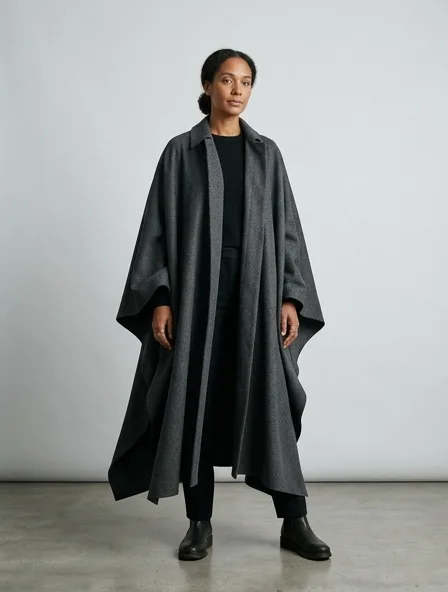
Design for a cape
A design render turns a written description of your cape into a photorealistic image, so a silhouette, a neckline or a pocket can be judged before anyone cuts cloth.
Name the length, the fit and the neckline first; those three decide whether a cape reads right on a body.
What you get
A photorealistic image of the cape, back in seconds, that you can refine in the same conversation.
Step by step
- Say who the cape is for and where it will be worn.
- Give the cloth, the color and the one detail that matters most: a neckline, a pocket, a hem.
- Ask for one change at a time and compare the versions.
- When the design is settled, keep it in a collection and move on to photos or a pattern.
A common mistake
Describing ten details at once: the image honours some and drops others. Two or three per request work better.
Cloths to name when you describe capes
- Cotton gabardine
- A classic pairing, 200 to 300 g/m²
- Wool melton
- A classic pairing, 450 to 750 g/m²
- Double-face cashmere
- A classic pairing, 500 to 800 g/m²
- Wool tweed
- A classic pairing, 450 to 650 g/m²
Typical trade ranges, not one mill's figures: confirm them with your mill.
The cape, in numbers
A cape is a sleeveless outer layer that hangs from the shoulders, with slits or openings for the arms. Its shoulder shaping decides whether it falls cleanly.
- Defining details
- Shoulder darts, arm slits, collar or hood, hook or tie closure
- Key measurements
- Shoulder width and length
Typical figures for an adult size M. The pattern tier is set from the real piece count when you order.
Also: how the studio works, prices and questions and answers.
Start free