Neoprene fabric guide
Neoprene Dress Design with AI
Mills make neoprene dresses regularly, usually in scuba knit at 280 to 380 g/m².
Of the 14 cloths this guide lists for this cut, it sits between cashmere knit and bouclé tweed in weight.
Next to bouclé tweed, it is lighter, shinier and stretchier.
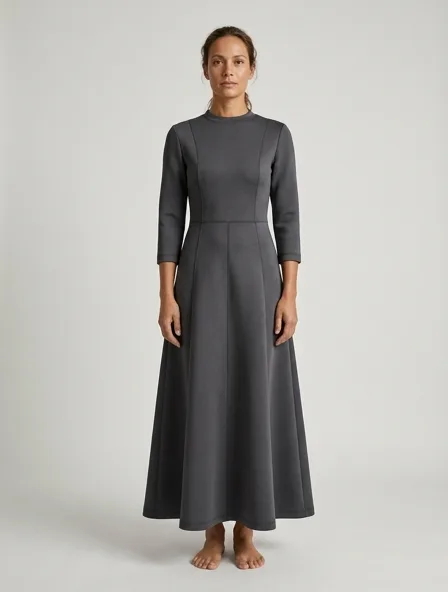
Neoprene Dress at a glance
- Cloth to ask your mill for
- Scuba knit
- Typical weight
- 280 to 380 g/m²
- Drape
- Structured, holds its own shape
- Stretch
- Moderate
- Breathability
- Low
- Warmth
- Warm
- Care
- Hand wash cold, dry flat
- How common
- Common
- Typical cloth price
- $15-35/yard
Typical trade ranges, not one mill's figures: confirm them with your mill.
The dress, in numbers
- Typical length
- 90 to 120 cm, from the high point of the shoulder
- Defining details
- Waist seam or princess seams, neckline, sleeve, zip or buttons
- Cloth needed
- about 2.0 to 3.0 m of 150 cm cloth, roughly $33 to $110 of cloth at typical prices
Typical figures for an adult size M. The pattern tier is set from the real piece count when you order.
How neoprene behaves on a dress
Cut into dresses, it keeps its own shape, so darts and seams do the fitting and a sculpted silhouette stays put.
At this length a structured cloth holds the shape of the pattern from top to hem.
It wears warm, which places it in autumn and winter collections.
It wants a cold hand wash and drying flat, so say so on the care label.
It holds its shape and resists water, but it is warm, does not breathe and creases if folded under heat.
About neoprene
Neoprene is a synthetic rubber foam, usually laminated with a knit on each face. In fashion it has largely given way to scuba knit, a thick double knit that looks alike and breathes better.
Neoprene foam is made by a handful of chemical producers and laminated by specialist mills; scuba knit comes from many knit mills.
It needs no lining, and its edges can be left raw or bonded.
Cutting, sewing and color
Its edges do not fray, so raw or bonded edges are an option; use a stretch needle and keep the iron cool.
Prints are usually applied by sublimation on the knit face, so a print sits on the surface.
It has a soft sheen that shows the folds without glare.
A description to start from
A dress in scuba knit, 280 to 380 g/m², with a structured drape and a soft sheen surface, for autumn and winter.
If neoprene is not quite right
- Lighter: Cashmere, in cashmere knit
- Heavier: Tweed, in bouclé tweed
- Cooler: Cotton, in cotton poplin
- More drape: Silk, in silk charmeuse
Also: how the studio works, prices and questions and answers.
Start free