Jersey fabric guide
Jersey Shirt Design with AI
A jersey shirt is a specialist order: ask for single jersey at 140 to 200 g/m², and expect fewer mills to take it on.
Of the 12 cloths this guide lists for this cut, it sits between shirting linen and silk and viscose velvet in weight.
Next to silk and viscose velvet, it is lighter, more matte, cooler to wear and easier to care for.
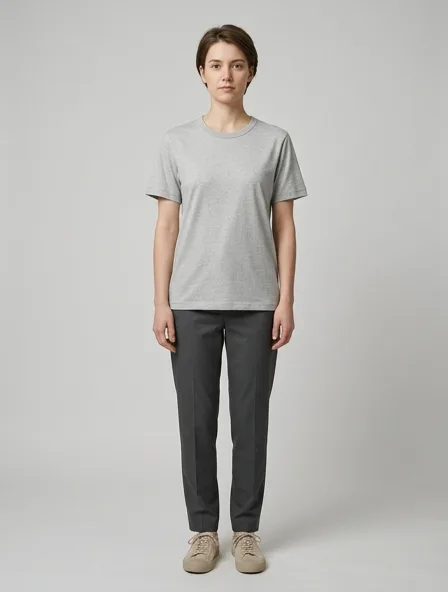
Jersey Shirt at a glance
- Cloth to ask your mill for
- Single jersey
- Typical weight
- 140 to 200 g/m²
- Drape
- Soft
- Stretch
- Moderate
- Breathability
- Medium
- Warmth
- Neutral
- Care
- Machine wash cold, inside out
- How common
- Niche, usually a specialist order
- Typical cloth price
- $5-15/yard
Typical trade ranges, not one mill's figures: confirm them with your mill.
The shirt, in numbers
- Typical length
- 72 to 80 cm, from the high point of the shoulder
- Defining details
- Collar and stand, split or one-piece yoke, front placket, barrel or French cuffs
- Cloth needed
- about 1.6 to 2.2 m of 150 cm cloth, roughly $9 to $36 of cloth at typical prices
Typical figures for an adult size M. The pattern tier is set from the real piece count when you order.
How jersey behaves on a shirt
On a shirt it skims the body without clinging, and gathers at a yoke or a cuff sit softly instead of standing up.
At this length a soft cloth moves gently at the hem and falls in loose folds.
It is neither warm nor cool, so it works across most of the year.
Wash it cold and inside out to keep the color.
It hardly creases, but a light jersey can twist after washing and bag at the knees and elbows.
About jersey
Jersey is knitted, not woven: rows of interlocking loops that stretch in every direction. It is knitted in cotton, viscose, wool, silk and blends, often with elastane.
Jersey is knitted on circular machines almost everywhere; the yarn and the gauge decide its quality more than the place.
It is rarely lined; a second layer of the same jersey is used where a lining would be.
Cutting, sewing and color
A ballpoint or stretch needle and a stretch stitch or an overlock; let the cloth relax for a day before cutting.
It takes dye evenly and prints well, though stretch can thin the color at knees and elbows.
Its surface is matte, so it photographs evenly under flat light.
A description to start from
A shirt in single jersey, 140 to 200 g/m², with a soft drape and a matte surface, for most of the year.
If jersey is not quite right
- Lighter: Linen, in shirting linen
- Heavier: Velvet, in silk and viscose velvet
- Warmer: Leather, in lamb nappa leather
Also: how the studio works, prices and questions and answers.
Start free