Formal fashion
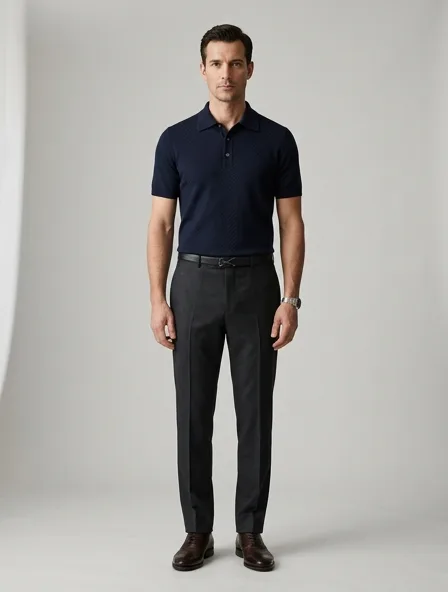
Formal Polo Shirt Design with AI
Formal wear is for occasions and offices: tailored, structured and finished with care.
For a formal polo shirt, ask for merino jersey (150 to 200 g/m²) or silk jersey (90 to 140 g/m²).
The look
- Palette
- Black, midnight navy, charcoal and ivory
- Details
- Satin facings, covered buttons and pressed pleats
- Silhouette
- Tailored and structured
- Finish
- Lined and pressed, with sharp edges
- Styling
- One strong silhouette with matched accessories
- Worn for
- Work, ceremonies and evenings
- Avoid
- Casual cloths and visible logos
- Who wears it
- 25 to 55, buyers dressing for occasions and work
The polo shirt, in numbers
- Defining details
- Flat-knit rib collar and cuffs, two- or three-button placket, side vents, longer back
- Key measurements
- Chest, shoulder width and length
Typical figures for an adult size M. The pattern tier is set from the real piece count when you order.
Making a formal polo shirt
Full linings, interfaced fronts and hand-finished hems keep the line sharp from the first wear to the last.
Look for cloths that press sharply and hang straight: worsted wool, silk faille, duchess satin, velvet for evening.
Cloths that suit a formal polo shirt
- Merino jersey
- 150 to 200 g/m², common
- Silk jersey
- 90 to 140 g/m², niche, usually a specialist order
- Stretch satin
- 110 to 160 g/m², niche, usually a specialist order
- Stretch velvet
- 220 to 300 g/m², common
Typical trade ranges, not one mill's figures: confirm them with your mill.
A description to start from
Formal polo shirt in merino jersey. Palette: black, midnight navy, charcoal and ivory. Details: satin facings, covered buttons and pressed pleats. Silhouette: tailored and structured.
Also: how the studio works, prices and questions and answers.
Start free