Sustainable fashion
Sustainable Leggings Design with AI
Sustainable fashion favours natural or recycled fibres, fewer chemicals and garments built to last.
For a sustainable leggings, ask for cotton and elastane jersey (180 to 260 g/m²) or merino rib (200 to 260 g/m²).
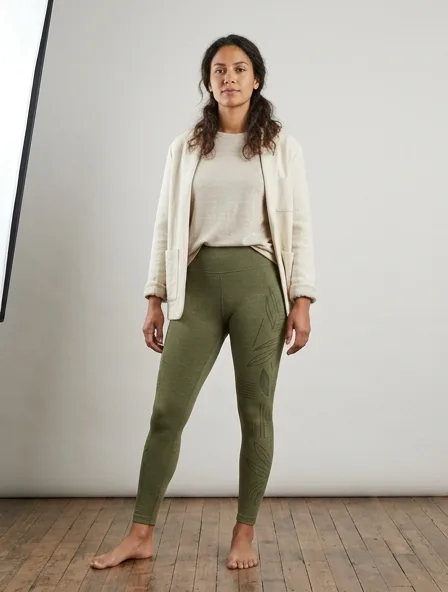
The look
- Palette
- Undyed ecru, earth tones, plant-dyed greens and rusts
- Details
- Natural buttons, visible mending and minimal trims
- Silhouette
- Timeless and easy, made to be worn for years
- Finish
- Undyed or low-impact dyes, washed rather than coated
- Styling
- Outfits built from few pieces that all work together
- Worn for
- Everyday wear, all year round
- Avoid
- Blends that cannot be recycled and coatings that hide the fibre
- Who wears it
- 20 to 45, buyers who read the label
The leggings, in numbers
- Defining details
- High waistband, gusset, flatlock seams, no side seam
- Key measurements
- Waist, hip and inside leg
Typical figures for an adult size M. The pattern tier is set from the real piece count when you order.
Making a sustainable leggings
Pieces are cut to waste little cloth, sewn to be repaired, and labelled with what they are made of and where.
Look for organic or recycled cotton, linen, wool and certified fibres, undyed or dyed with low-impact processes.
Cloths that suit a sustainable leggings
- Cotton and elastane jersey
- 180 to 260 g/m², common
- Merino rib
- 200 to 260 g/m², common
- Elastane jersey
- 200 to 280 g/m², a classic pairing
Typical trade ranges, not one mill's figures: confirm them with your mill.
A description to start from
Sustainable leggings in cotton and elastane jersey. Palette: undyed ecru, earth tones, plant-dyed greens and rusts. Details: natural buttons, visible mending and minimal trims. Silhouette: timeless and easy, made to be worn for years.
Also: how the studio works, prices and questions and answers.
Start free