Vintage fashion
Vintage Culottes Design with AI
Vintage borrows from past decades, from 1950s tailoring to 1990s denim, with a modern fit.
For a vintage culottes, ask for rigid denim (340 to 470 g/m²) or wool tweed (350 to 500 g/m²).
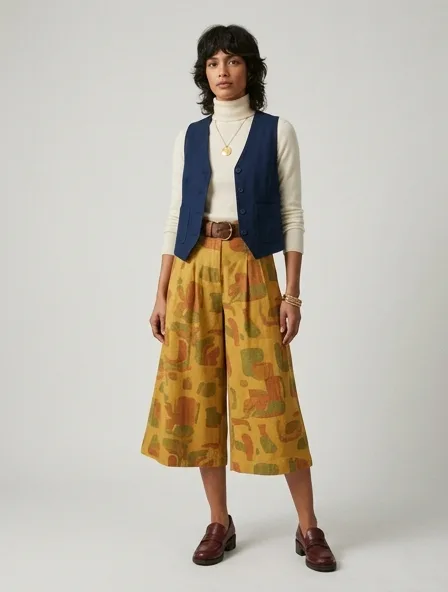
The look
- Palette
- Faded indigo, mustard, rust and cream
- Details
- Contrast stitching, period collars and patch pockets
- Silhouette
- Period-true shapes adjusted to today's fit
- Finish
- Washed, faded or slightly worn in
- Styling
- One period piece with modern basics
- Worn for
- Weekends, events and everyday wear
- Avoid
- A costume look; one period piece per outfit is enough
- Who wears it
- 18 to 40, buyers who like a story behind a piece
The culottes, in numbers
- Defining details
- Wide leg, mid-calf length, waist pleats, side zip
- Key measurements
- Waist, hip and length
Typical figures for an adult size M. The pattern tier is set from the real piece count when you order.
Making a vintage culottes
Period construction shows: bound buttonholes, side zips, darts placed where an older pattern put them.
Look for cloths with a past: washed denim, tweed, cotton velvet, satin with a soft sheen.
Cloths that suit a vintage culottes
- Rigid denim
- 340 to 470 g/m², a classic pairing
- Wool tweed
- 350 to 500 g/m², common
- Cotton velvet
- 250 to 350 g/m², common
- Cotton twill
- 200 to 320 g/m², a classic pairing
Typical trade ranges, not one mill's figures: confirm them with your mill.
A description to start from
Vintage culottes in rigid denim. Palette: faded indigo, mustard, rust and cream. Details: contrast stitching, period collars and patch pockets. Silhouette: period-true shapes adjusted to today's fit.
Also: how the studio works, prices and questions and answers.
Start free