Workwear fashion
Workwear Cape Design with AI
Workwear turns utility clothing into everyday fashion: durable cloths, pockets and reinforcements.
For a workwear cape, ask for cotton gabardine (200 to 300 g/m²) or rigid denim (340 to 470 g/m²).
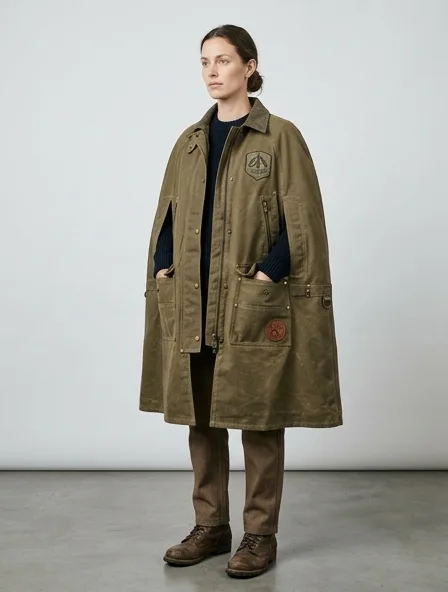
The look
- Palette
- Duck brown, indigo, olive and ecru
- Details
- Triple stitching, rivets, tool pockets and bar tacks
- Silhouette
- Straight and roomy, made to move in
- Finish
- Rinsed or washed, built to fade
- Styling
- Heavy cotton and denim layers, boots and a chore coat
- Worn for
- Everyday wear and weekends
- Avoid
- Delicate cloths and fussy trims
- Who wears it
- 25 to 45, buyers who want pieces that age well
The cape, in numbers
- Defining details
- Shoulder darts, arm slits, collar or hood, hook or tie closure
- Key measurements
- Shoulder width and length
Typical figures for an adult size M. The pattern tier is set from the real piece count when you order.
Making a workwear cape
Triple-stitched seams, bar tacks and rivets at stress points, and pockets placed for tools, not for show.
Look for durable cloths that fade well: cotton duck canvas, rigid denim, heavy twill, moleskin.
Cloths that suit a workwear cape
- Cotton gabardine
- 200 to 300 g/m², a classic pairing
- Rigid denim
- 340 to 470 g/m², niche, usually a specialist order
- Wool tweed
- 450 to 650 g/m², a classic pairing
- Wool melton
- 450 to 750 g/m², a classic pairing
Typical trade ranges, not one mill's figures: confirm them with your mill.
A description to start from
Workwear cape in cotton gabardine. Palette: duck brown, indigo, olive and ecru. Details: triple stitching, rivets, tool pockets and bar tacks. Silhouette: straight and roomy, made to move in.
Also: how the studio works, prices and questions and answers.
Start free