Luxury fashion
Luxury Blazer Design with AI
Luxury is quality you can see up close: rare materials, exact cuts and finishing done by hand.
For a luxury blazer, ask for silk shantung (90 to 140 g/m²) or cashmere and wool suiting (260 to 340 g/m²).
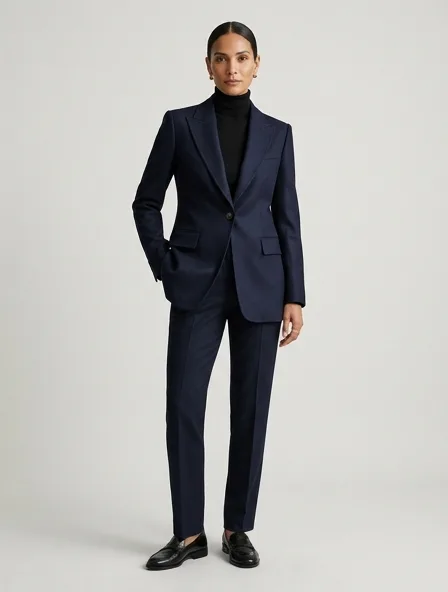
The look
- Palette
- Ivory, camel, black and deep navy
- Details
- Hand-finished edges, horn or mother-of-pearl buttons and hidden seams
- Silhouette
- Precise and close to the body, nothing loose by accident
- Finish
- Pressed and lined, with no visible stitching where it can be avoided
- Styling
- One exceptional piece per look, everything else quiet
- Worn for
- Work, dinners and travel
- Avoid
- Visible logos and trend details that date fast
- Who wears it
- 25 to 55, buyers who value craft and heritage
The blazer, in numbers
- Defining details
- Notch or peak lapel, two-button front, flap or patch pockets, back vents
- Key measurements
- Chest, shoulder width and sleeve length
Typical figures for an adult size M. The pattern tier is set from the real piece count when you order.
Making a luxury blazer
Seams are narrow and bound or French-seamed, linings are silk or cupro, and buttonholes are worked by hand where it shows.
Look for natural fibres with a fine hand: silk, cashmere, fine wool, with a sheen that comes from the fibre rather than a coating.
Cloths that suit a luxury blazer
- Silk shantung
- 90 to 140 g/m², niche, usually a specialist order
- Cashmere and wool suiting
- 260 to 340 g/m², niche, usually a specialist order
- Worsted wool suiting
- 230 to 320 g/m², a classic pairing
- Duchess satin
- 200 to 280 g/m², niche, usually a specialist order
Typical trade ranges, not one mill's figures: confirm them with your mill.
A description to start from
Luxury blazer in silk shantung. Palette: ivory, camel, black and deep navy. Details: hand-finished edges, horn or mother-of-pearl buttons and hidden seams. Silhouette: precise and close to the body, nothing loose by accident.
Also: how the studio works, prices and questions and answers.
Start free